


Who Was Elizabeth Báthory? What to Know About the 16th-Century ‘Blood Countess’ Dramatized in “Monster: The Lizzie Borden Story”
Who Was Elizabeth Báthory? What to Know About the 16th-Century ‘Blood Countess’ Dramatized in “Monster: The Lizzie Borden Story”

Emily BlackwoodFri, September 18, 2026 at 11:30 AM UTC
0
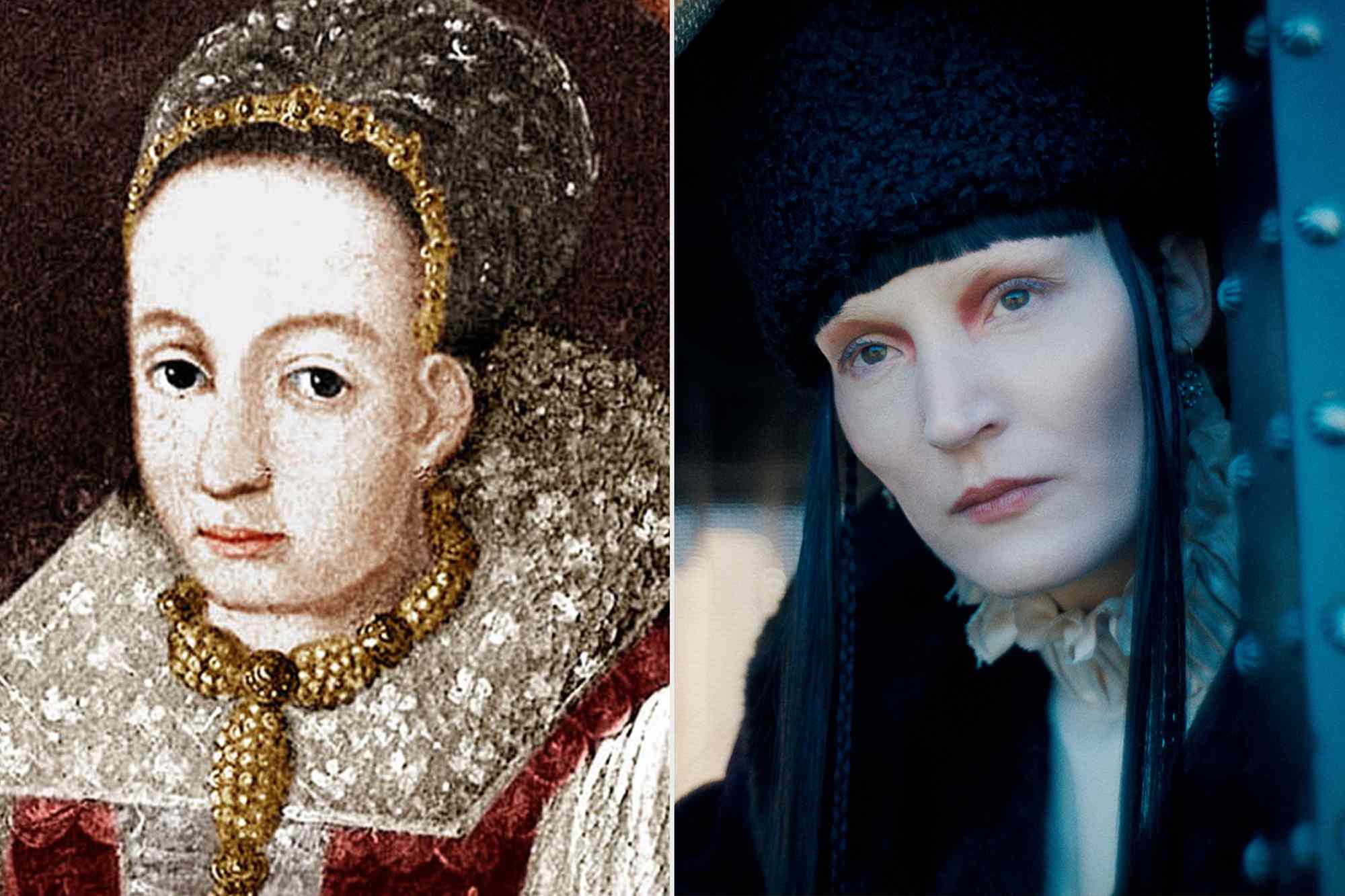
Elizabeth Báthory; Vicky Krieps as Elizabetta Bathory in episode 404 of ‘Monster: The Lizzie Borden Story’Credit: Apic/Bridgeman via Getty; Courtesy of Netflix -
Elizabeth Báthory, a 16th-century Hungarian countess, was accused of torturing and killing up to 600 women
Scholars debate whether her crimes were exaggerated or if she was a victim of political and financial conspiracies
The Netflix series Monster: The Lizzie Borden Story connects Báthory’s lore to Lizzie Borden’s story
Monster: The Lizzie Borden Story explores more than just its titular accused killer.
The series also turns to other women associated with unspeakable violence to unpack the “legacy of female rage,” according to star Ella Beatty. Among them is Elizabeth Báthory, a 16th-century Hungarian countess notorious for claims that she tortured and killed over 600 young women.
“Every season of Monster has been an exercise in understanding the person’s psychology,” the actress told Tudum in August 2026. “Are they born or are they made? I knew from the beginning that Ryan Murphy and Ian Brennan were really interested in exploring what brings a woman to the point of violence.”
In the first episode of the Netflix anthology series’ fourth season, Lizzie’s maid, Bridget Sullivan, introduces her to Báthory’s alleged crimes and horrific lore. Lizzie becomes fixated on the tale, which the series suggests may have inspired her alleged future axe-wielding slayings.
So, who was Elizabeth Báthory? Here’s everything to know about the alleged 16th-century female killer and the truth behind the gruesome stories that made her infamous.
Who was Elizabeth Báthory?

Portrait of Countess Elizabeth BáthoryCredit: Fine Art Images/Heritage Images via Getty
According to National Geographic, Báthory was born in 1560 to one of Transylvania’s most prominent noble families. Aleksandra Bartosiewicz of Poland’s University of Łódź, who published a 2018 research paper on Báthory, told the publication that the countess was exposed to brutality at an early age and suffered from “violent mood swings.”
At 15, she married Count Ferenc Nádasdy and moved to his castle in western Hungary. It was there, Bartosiewicz claimed, that her husband continued to subject her to acts of cruelty, like gifting her gloves with spiked claws to torture her servants.
After Nádasdy died in 1604, Báthory relocated to Čachtice Castle in western Slovakia — where her reputation took a much darker turn.
What was Elizabeth Báthory accused of?
The countess — who would later be referred to as the “Blood Countess” and “Countess Dracula” — was accused of torturing and killing hundreds of young women inside her castle, according to National Geographic. Kimberly Craft wrote in her 2009 book Infamous Lady: The True Story of Countess Erzsébet Báthorythatwitnesses would later claim that she would stab needles into her victims’ lips, cut off their hands and fingers and beat them relentlessly until they died, among other atrocities.
Rumors of her malice were so widespread that local families would hide their daughters so they couldn’t be called to her service, according to Tony Thorne, author of the 1998 book Countess Dracula: The Life and Times of Elizabeth Báthory.
How many people did Elizabeth Báthory allegedly kill?

The ruins of the medieval castle Cachtice, well known as the home of Countess Elizabeth BáthoryCredit: Alamy
In the 400 years since her death, Báthory has been accused of killing around 650 young women. Rachael Bledsaw of Washington State’s Highline College told National Geographic in October 2022 that Báthory’s alleged violence went largely unchecked until her victims began to include lower-ranking nobles, rather than only “serfs and servants.”
When Báthory was arrested and imprisoned in 1610, authorities could only tie her to the deaths of 80 victims — a far cry from the alleged hundreds of killings that would eventually fuel both her infamy and the quest to clear her name.
Advertisement
“Who has the time in one lifetime to, one by one, kill 650 young women?” Dr. Annouchka Bayley, an associate professor at Cambridge University and author of the historical fiction novel The Blood Countess, asked the BBC in May 2024. “I mean she would have been a busy girl.”
Was Elizabeth Báthory convicted?
Báthory and four of her servants were put on trial for 80 counts of murder, but only the countess escaped execution, per Historyand National Geographic. She was never convicted and was instead locked away in her own castle’s jail until she died in 1614 at the age of 54.
Some scholars have theorized that powerful relatives and political rivals conspired to have Báthory imprisoned for their own benefit. According to National Geographic, Hungarian King Matthias II owed the countess a large debt and considered her a political threat. Dr. Bayley told the in October 2024 that she inherited a “Jeff Bezos-style huge fortune” after her husband’s death that also could have made her a target.
Did Elizabeth Báthory ever confess?

Portrait of Elizabeth Báthory, the blood queen Kingdom of HungaryCredit: Alamy
Though the countess never formally confessed, Craft claimed in her book that Báthory made incriminating statements to her pastor on the night of her arrest. When he asked why she had allowed the servants she blamed for the killings to murder the girls, Báthory allegedly replied, “I did it because even I myself was afraid of them.”
Without a recorded admission of guilt or hard evidence, some experts argue that Báthory’s crimes were either exaggerated or that she was actually innocent.
Dr. Bayley is one of the latter, telling both the AP and the BBC that the countess was a wealthy, radical feminist who refused to remarry after her husband’s death, taught young women to read and may have owned a printing press.
Did Elizabeth Báthory really bathe in blood?
In addition to her staggering alleged victim count, another highly debated detail from the countess’ history is that she killed young women because she believed bathing in their virginal blood would help retain her beauty and youth.
Though that gruesome story is depicted in Monster: The Lizzie Borden Story, none of the surviving witness testimony from Báthory’s case mentions her bathing in blood. In fact, the story didn’t appear in writing until more than a century after her death, when László Turóczi included it in his 1729 account of the countess, per SYFY.
Was Lizzie Borden really inspired by Elizabeth Báthory?

Vicky Krieps as Elizabetta Báthory in episode 401 of ‘Monster: The Lizzie Borden Story’Credit: Courtesy of Netflix
In Monster: The Lizzie Borden Story, Lizzie’s maid, Bridget Sullivan (Vicky Krieps), gifts her a book detailing Báthory’s alleged blood baths. After they read it, Lizzie asks if the story is true. Bridget suggests it is “as real” as they are and tells her that Báthory’s tale offers an important lesson: “Blood is power.”
There’s no historical evidence that Lizzie was ever aware of Báthory or her alleged crimes. Instead, the Netflix series uses the countess to draw a connection between Lizzie and other women who became infamous for violence, including serial killer Aileen Wuornos (played by Sarah Paulson).
“Lizzie was fascinated by Elizabeth Báthory and Aileen Wuornos was fascinated with Lizzie Borden,” Brennan told PEOPLE of the storytelling in Monster. “So in a way, it was there for the taking and it reminded us that female rage is something that runs through human history. It was a way to both pull it into a more contemporary setting, but also put it in a deeper, much earlier, more historical context as well.”
on People
Source: “AOL Entertainment”
