


We May Soon Find Out Why Warren Buffett and Berkshire Hathaway Have Almost $400 Billion in Cash
We May Soon Find Out Why Warren Buffett and Berkshire Hathaway Have Almost $400 Billion in Cash
Lee Jackson Sun, July 19, 2026 at 7:01 PM UTC
0
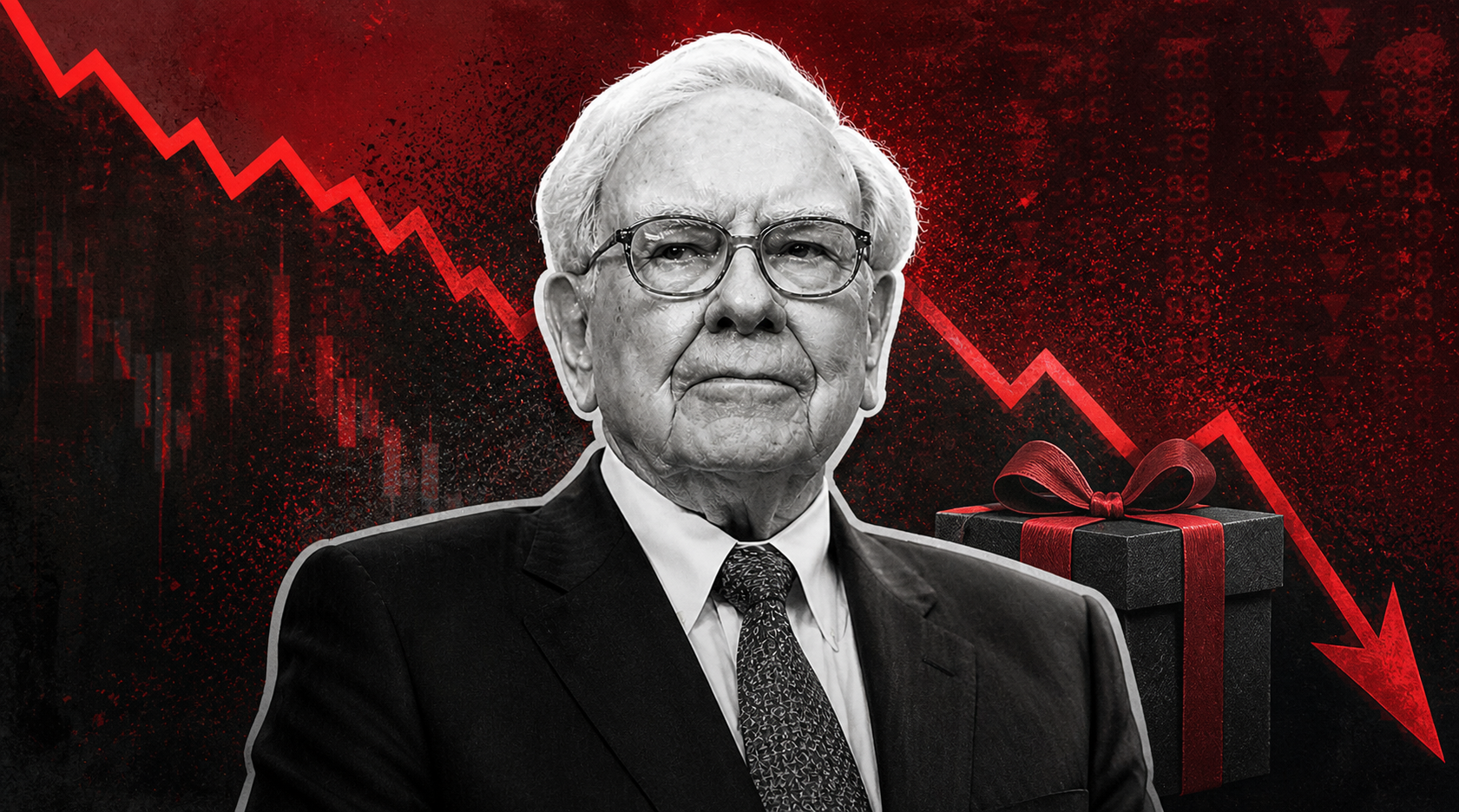
Berkshire Hathaway (NYSE: BRK-B) has built one of the most closely watched cash positions in financial history, and it keeps growing. The company closed 2025 with $373.3 billion in cash and cash equivalents, the largest corporate cash hoard ever recorded in American business. That figure itself was surpassed within months: the reserve swelled to a new record of $397.4 billion by the end of the first quarter of 2026, according to Berkshire's own 10-Q filing with the SEC. The prior peak, set in the third quarter of 2025, had stood at $381.7 billion. The reserve is now so large that it surpasses the combined cash holdings of Apple, Amazon, Alphabet, and Microsoft.
This accumulation was not accidental. Between 2022 and 2024, Berkshire sold a net $172.93 billion in equities while buying relatively little in return, a deliberate, sustained withdrawal from positions that Warren Buffett concluded had reached or exceeded fair value. That included trimming Apple (NASDAQ: AAPL) from nearly half the equity portfolio down to roughly 22%, cutting Bank of America (NYSE: BAC) by more than half, and paring back Amazon.com (NASDAQ: AMZN), among others. The selling did not stop when leadership changed: in the first quarter of 2026, Berkshire was a net seller of another $8.1 billion in publicly traded stocks, marking the 14th consecutive quarter of net equity reductions. Most of the cash sits in short-term Treasury bills, which at current yields provide meaningful income while preserving optionality for a major deployment.
Act now: the analyst who called NVIDIA in 2010 just named his top 10 AI stocks — and Apple didn't make the cut. Grab the names FREE today.
Greg Abel, who succeeded Buffett as CEO in January 2026, took the stage at the Berkshire annual shareholder meeting in Omaha for the first time, with Buffett watching from the audience as chairman. Abel moved to assure investors that the conservative posture would continue. In his first annual shareholder letter, he described the balance sheet as "a strategic asset to be deployed at the right time," one that "allows us to act decisively, invest when others are tentative or fearful, and stand firm when financial storms roll through." At the meeting itself, Buffett told CNBC that he did not see an ideal investing environment, a view consistent with Berkshire's actions over the prior three years.
Not that Abel has been entirely idle on capital deployment. On January 2, 2026, Berkshire completed its $9.7 billion all-cash acquisition of OxyChem from Occidental Petroleum, adding a leading U.S. chemicals producer to its portfolio. That deal, struck the previous October, was Berkshire's largest acquisition since it paid $11.6 billion for insurer Alleghany in 2022. Buybacks also quietly resumed in March 2026, though the first-quarter repurchase totaled just $234 million, a rounding error relative to a $397 billion cash position.
Advertisement
The context for all of this matters. The stock market has been trading at or near all-time highs, and many investors have grown accustomed to parabolic gains in chip stocks and anything carrying an artificial intelligence narrative. The pattern of strong earnings followed by sharp sell-offs has become a recurring feature of this market. Consider Meta Platforms (NASDAQ: META): the company reported genuinely impressive first-quarter 2026 results, with ad impressions up 19% year over year and revenue beating estimates, only to see shares plunge nearly 10% after management raised its full-year capital expenditure guidance to $125 billion to $145 billion. That single-session decline erased roughly $175 billion in market value.
The harder reality is that markets priced for perfection are vulnerable. If a severe correction materializes, the kind of dislocations last seen in 2008 and 2009, cash-strapped companies could find themselves making the trip to Omaha. Buffett deployed capital on precisely those terms during the financial crisis, providing emergency financing to General Electric and Goldman Sachs (NYSE: GS), among others, in exchange for preferred shares carrying substantial dividends. By the end of 2009, that crisis-era dealmaking had delivered Berkshire outsized returns while the broader market was still recovering. With nearly $400 billion available today, Abel's Berkshire is positioned to play exactly the same role if a 20% to 30% correction opens the door. The old Wall Street adage attributed to Baron Nathan Mayer Rothschild still applies: "Buy when there's blood in the streets, even if the blood is your own." Berkshire has never been better equipped to do so.
Editor's note: This article has been to reflect Berkshire Hathaway's Q1 2026 cash position of $397.4 billion (up from the article's earlier $397 billion reference), the corrected Meta Platforms single-session market cap loss of approximately $175 billion (revised from $160 billion to $170 billion), the addition of Berkshire's $9.7 billion OxyChem acquisition completed January 2, 2026, context from Greg Abel's first annual shareholder letter and his debut at the 2026 annual meeting, and the detail that Q1 2026 marked the 14th consecutive quarter of net equity sales.
Act now: the analyst who called NVIDIA in 2010 just named his top 10 AI stocks — and Apple didn't make the cut. Grab the names FREE today.
Contact editorial@247wallst.com for any questions or corrections.
Source: “AOL Money”
