


Trump's new tariffs would put rates right back where they were before the Supreme Court stepped in
Trump's new tariffs would put rates right back where they were before the Supreme Court stepped in

Ben WerschkulWed, November 25, 2026 at 9:38 PM UTC
4
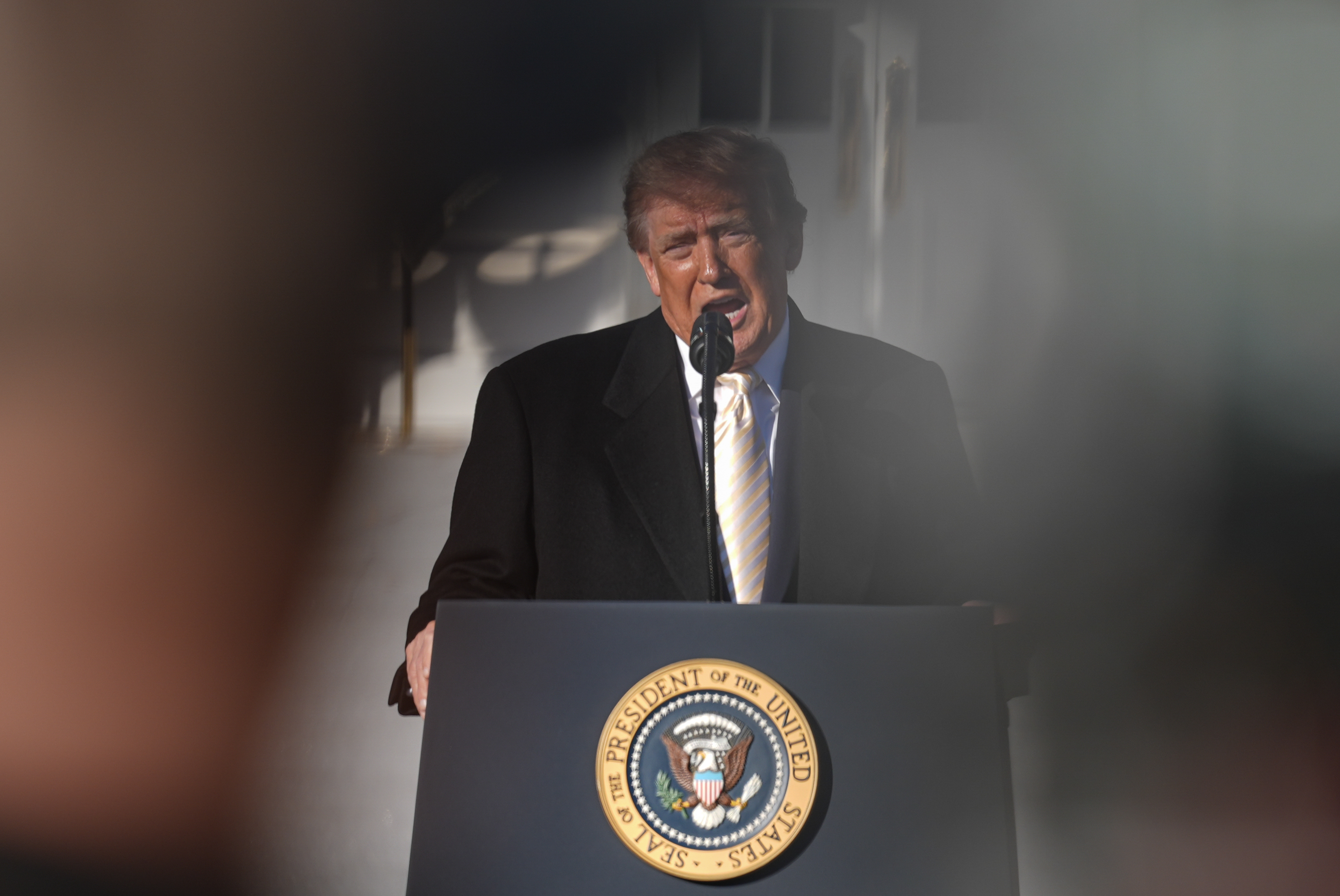
President Donald Trump delivers remarks on the South Lawn of the White House on Tuesday. (Mehmet Eser/Anadolu via Getty Images)
A new wave of tariffs from the White House would move overall rates almost exactly back to where they stood in early 2026, according to one initial analysis of the new duties.
The Yale Budget Lab says the newly unveiled plans, if enacted, would return the US to rates seen just before the Supreme Court struck down President Trump's blanket tariffs in February.
Read more: 5 ways to tariff-proof your finances
The estimated overall average statutory rate would rise from the current 11.4% to 13.9% early next year. The rate in February, just before the high court struck down Trump's tariffs enacted under the International Emergency Economic Powers Act of 1977 (IEEPA), was 13.8%.
That remains well below the overall rates seen in 2025. The group estimates that 2025 rates exceeded 15%, peaking at nearly 23% in the weeks after "Liberation Day" in April 2025.
"The administration said it wanted to rebuild the IEEPA tariff regime using Section 301; with this proposal, it will have done so in the aggregate," the group said in its analysis.
The mix of countries bearing the duties will shift slightly, the budget lab noted, with apparel, electronics, and appliances among the biggest categories affected by the new duties.
The reaction from other corners, meanwhile, was that a combination of widespread exemptions, smaller rate changes on other trading partners, and many tariffs that will not be stacked meant the impact could be smaller.
"The latest US tariff announcement is not as alarming as it looks," Stephen Brown, chief North America economist at Capital Economics, wrote in an analysis.
Advertisement
"The increase in the effective tariff rate looks set to be a touch lower than we've been assuming for our forecasts, although the new tariffs will still provide a marginal boost to prices and keep core goods inflation firm into next year," he added, noting that an exact projection from his group will come later on.
US Trade Representative Jamieson Greer downplayed the macroeconomic effects in a CNBC appearance Wednesday, describing the total changes as moves that "really will just top up a few percentage points."
He added that the higher rates on China — the one place where the new tariffs are set to stack on top of other tariffs — are an exception and that the situation for most countries will be less dramatic.
A new 'deal rate' for dozens of countries
One major trading partner dodged new tariffs this week when it was announced that an investigation in Mexico was still being reviewed. Greer added that recent talks have been going well.
Canada was also not subject to this eight-month investigation, which wrapped up this week and covered China, the European Union, and 14 other nations.
The visitors' entrance to the U.S. Trade Representative's office is seen in 2024 in Washington. (J. David Ake/Getty Images)
China is set for a 20% baseline "deal rate," which could jump to 40% if ongoing talks break down, while other partners will see much more modest changes.
Rates on some EU goods will jump from 10% to 15% if the new tariffs on excess structural capacity go forward and replace previous tariffs imposed around the issue of forced labor.
Yet the exemption for an array of goods that the EU and others enjoy includes key products such as semiconductors, as well as automobiles, steel, and aluminum, which are subject to a separate tariff authority.
Other goods the Trump administration has carved out in recent months, notably certain energy and food products, will also be exempted.
Ben Werschkul is a Washington correspondent for Yahoo Finance.
Source: “AOL Money”
