


RIP Volkswagen? The downfall of a German giant
RIP Volkswagen? The downfall of a German giant

Hans van LeeuwenSat, July 18, 2026 at 5:00 AM UTC
0
Oliver Blume, the 58-year-old chief executive of Volkswagen Group, has lived and breathed the mighty German car industry for three decades.
After training as an engineer, he began his career in the body shop of Audi, honing his skills at a time when German cars were still the first and last word in automotive excellence.
He surely couldn’t have imagined, or wanted, his stellar VW trajectory to end up like it did last week.
After rising through the ranks via Audi, SEAT and Porsche, there was Blume warning his staff of job cuts and factory closures and fighting with politicians and union bosses.
But he has no choice. In its 90th year, VW faces an existential threat.
For decades, VW has ridden on the coat-tails of a rising China. The Chinese bought Volkswagens, Audis and Porsches in their millions, swelling the company’s profits and seemingly securing the future.
Then the music stopped.
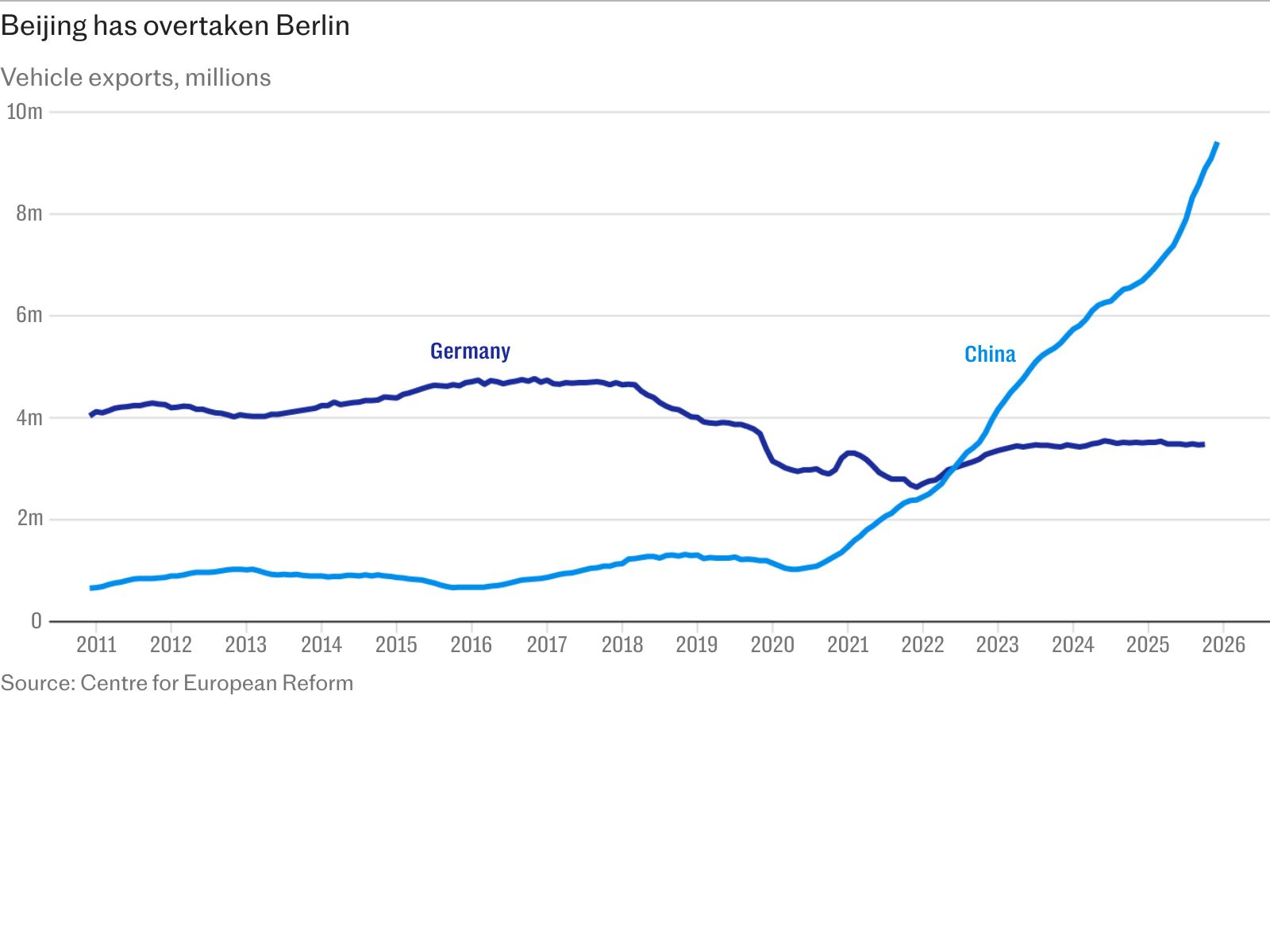
Chinese carmakers came of age, and their cheap and sophisticated electric vehicles blew the Germans away – first in China and now, increasingly, everywhere else.
In the past three months, VW’s sales in China have collapsed by more than one third from the same period last year.
“In automotive terms, the changes have happened in the blink of an eye,” says Tu Le, founder of the US consultancy Sino Auto Insights.
“All the Germans – BMW, Mercedes, VW Group, including Porsche and Audi – they’re all still trying to find a bottom. The worst is still in front of them, from the standpoint of how much further their sales can shrink.”
The German carmakers have been slow to react. Rather than steer away from the abyss, they are teetering on its edge. And Blume, at the wheel of VW, can see over the precipice.
“Europe is under massive economic and geopolitical pressure. Germany, as an export nation, is particularly affected,” the chief executive told his staff in a memo. “And in the automotive industry, the challenges appear as if under a magnifying glass.”
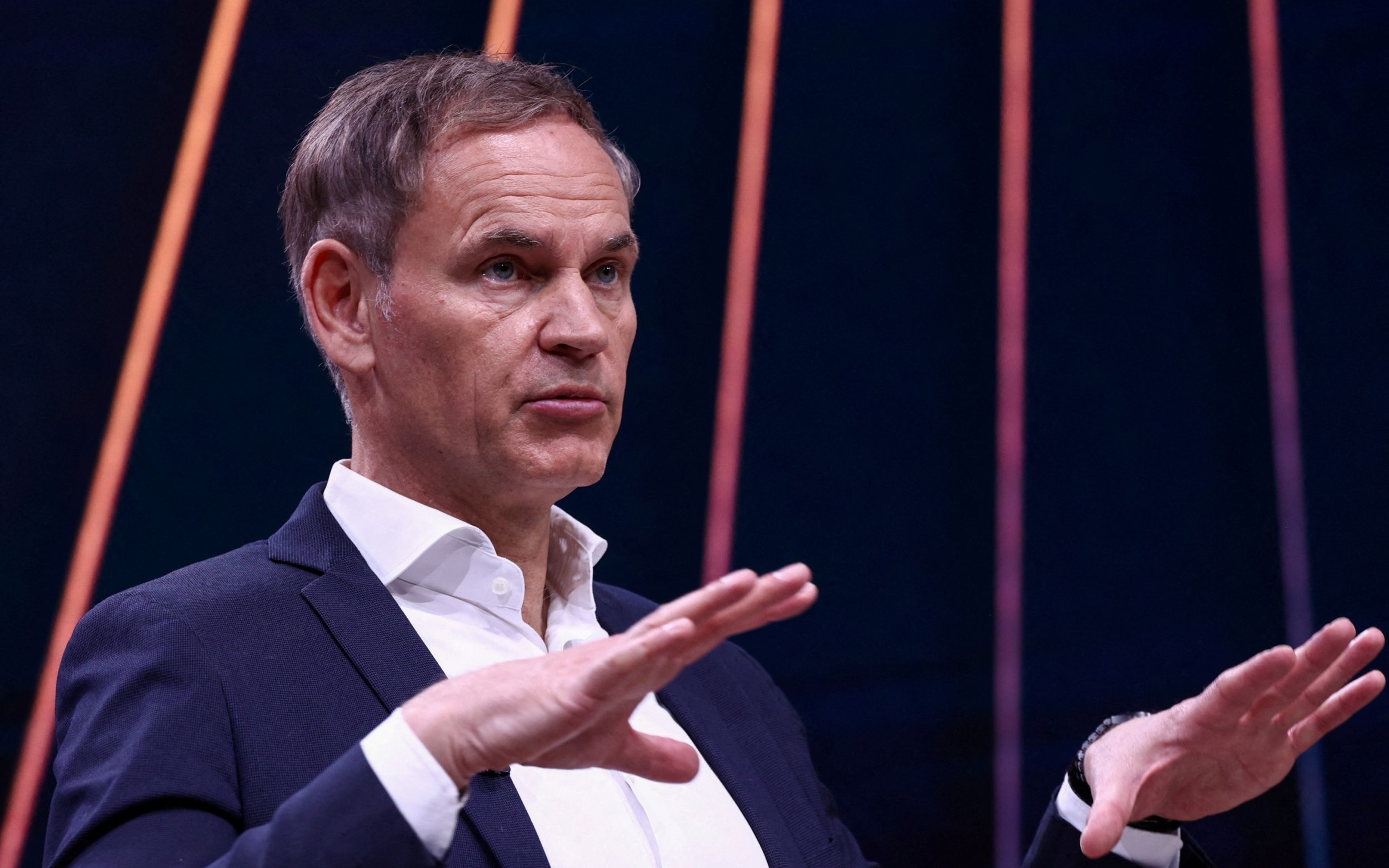
Oliver Blume, the chief executive of Volkswagen, says Europe is facing ‘massive economic and geopolitical pressure’ - Liesa Johannssen/Reuters
VW’s 650,000-plus headcount was “no longer sustainable”, Blume said. Workers face an invidious choice: take pay cuts all round, or 50,000 of them will have to lose their jobs, on top of a similar-sized cull announced last year.
Factories in Emden, Hanover, Zwickau and Neckarsulm, which churn out some 750,000 cars a year, are under threat of closure.
The chief executive said he was still holding out for “smart solutions” to keep these plants running. This might involve turning some of them over to Germany’s booming defence industry – an idea that has already proved controversial.
Blume’s aim is to save VW. Yet his plans have stoked enmity on the carmaker’s board, where half the 20 members are staff representatives and two are politicians from the company’s home state of Lower Saxony.
The company’s works council, which supplies the employee members to the board, says “virtually nothing” remains of the trust and goodwill that the chief executive started with back in 2022.
Members reportedly rejected his restructuring plan last week by 12 votes to seven. Meanwhile, staff unrest is brewing, and may soon come to a head.
VW’s predicament has sent shockwaves across Germany as well. As the country’s biggest automotive champion, it is heavily enmeshed with the “mittelstand” of small to medium-sized industrial companies that form the backbone of the national economy. Now, the VW brand has become an avatar for fears of “deindustrialisation”.
“Volkswagen is not merely a symbol of the German economy. When the company falters, it triggers domino effects across broad sectors of the economy,” says Stefan Bratzel, of Germany’s Centre of Automotive Management.
There is talk of VW moving, or outsourcing, most of its engineering and design expertise to China. Some even speculate the company could end up with a Chinese owner.
With the car giant’s future hanging in the balance, experts say it could be the most high-profile casualty of Europe’s struggle against US tariffs and what economists have called the “China shock 2.0”.
It’s a remarkable comedown for the beloved marque behind the Beetle, the Golf, Polo, the Porsche 911, the Audi 80 and A4, and the owner of Skoda, Bentley and Lamborghini.
Many are asking the question: how did Germany’s automotive icon come to this?
Crumbling foundations
Germany has been at the bleeding edge of automotive technology ever since Bertha Benz took to the road in 1888, driving the world’s first true petrol-powered car.
VW itself was founded later, in 1937 by a Nazi-controlled trade union to make an affordable “people’s car”. But it was put to work making military vehicles during the Second World War, and among the companies using slave labour.
After the war, the occupying British forces arrived in Wolfsburg to find the company’s main factory largely destroyed.
Its fortunes were revived when Major Ivan Hirst, a British Army officer, convinced his superiors to place an order for 20,000 of what would later become known as the “Beetle”. This laid the ground for the company’s emergence as a major success story of an economically resurgent Germany.
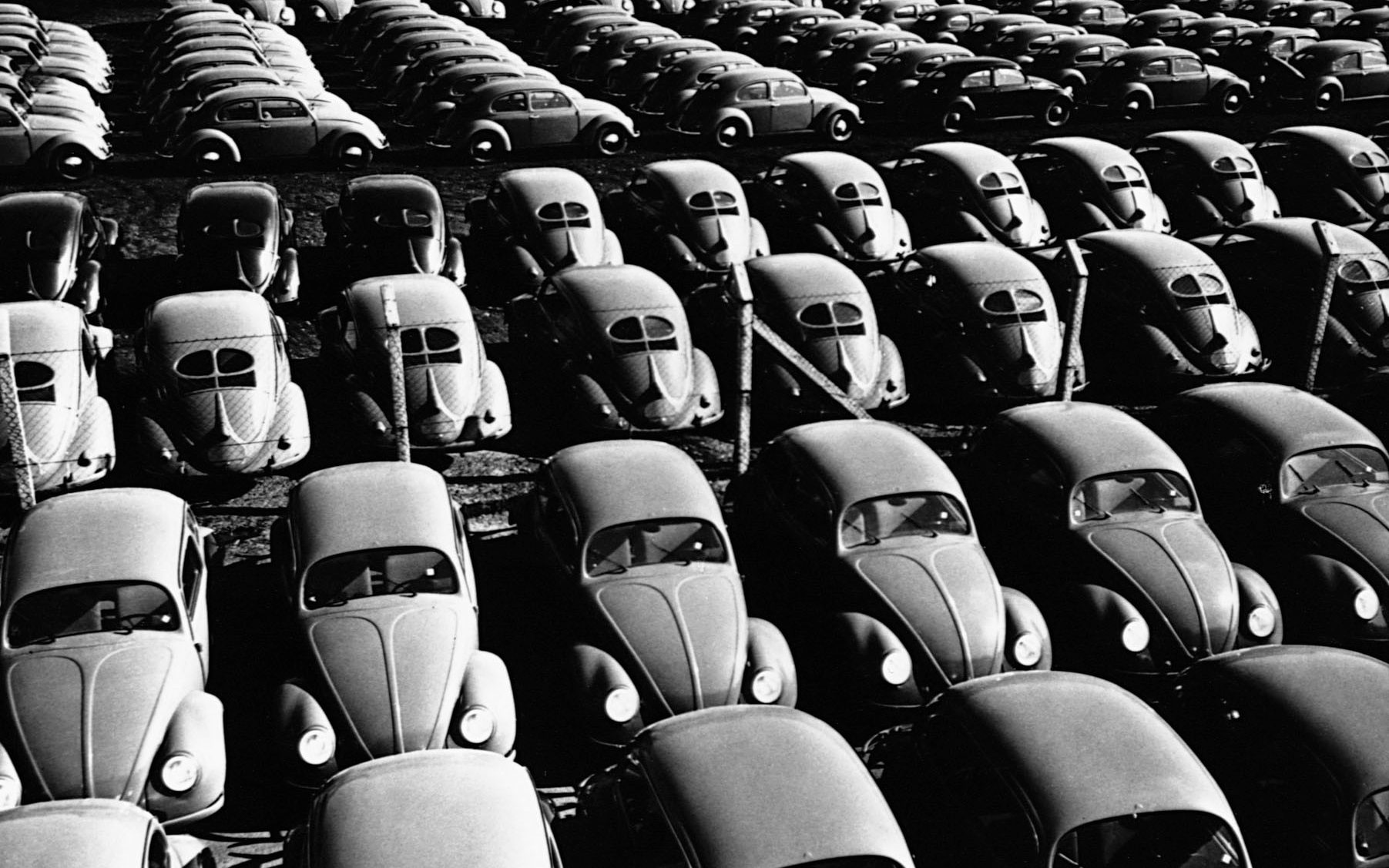
The Beetle quickly became a symbol of Germany’s post-war economic renaissance - Corbis
Philipp Raasch, a former Mercedes-Benz strategist who blogs as “the German Autopreneur”, writes that Germany’s success – embodied by VW – rested on four pillars.
The first was the ability of domestic engineers to perfect the design and assembly of the combustion engine, doing it better than anyone else. “That was our moat,” he writes.
The second pillar was the industry’s elaborate mittelstand ecosystem. Towns or cities like Stuttgart, Munich, Wolfsburg and Ingolstadt host not just factories but also dozens of components suppliers and research institutes.
Then there was the cheap and abundant energy from Russia to power those ecosystems. Finally, and most recently, there was China’s fathomless and highly profitable hunger for German-made cars.
The problem, says Raasch, is that these foundations are all “crumbling at once”.
The combustion engine is rapidly ceding ground to electric vehicles (EVs); the ecosystem is heading offshore; Russian gas has evaporated following Vladimir Putin’s invasion of Ukraine; and China’s insatiable appetite is increasingly focused on its own domestic brands.
Even a secondary support strut, the American market – one of the last holdouts of the combustion engine – looks shakier than it used to.
Donald Trump’s 15pc tariff on European car imports is pushing VW and other German brands towards localising production, and streamlining the number of models they make and sell.
Of course, Trump’s tariffs may be temporary, but the transformation wrought by China looks permanent. Worse, so far it is unfolding faster than VW can react.
For although the German carmakers were quick to see the Chinese opportunity 25 years ago, they have been slow to recognise the current threat.
China’s EV opportunity
VW began courting the Chinese back in 1984, forming a joint venture with SAIC Motor – one of the country’s big state-owned carmakers.
By the late 1990s, it had become China’s pre-eminent carmaker with a market share north of 50pc. If you had jumped into a Chinese taxi at that point, chances were it was a VW Santana or Jetta.
But in 2006, the Communist Party leadership in Beijing decided to raise its sights from being the “world’s workshop” for basics such as socks and cheap merchandise, targeting more advanced manufacturing such as cars.
Officials looked at where China could move up the value chain and saw an opportunity in EVs and batteries. Rather than trying to win a contest the Germans already dominated, China would start competing on an entirely new playing field.
Over the next 15 years, more than $230bn was poured into building an EV industry – helping to raise a new generation of “new energy vehicle” champions including BYD, Geely, SAIC, Chery and Xiaomi.
Today, EVs and hybrids comprise half of all new car sales in China and BYD is the world’s biggest electric car manufacturer (having overtaken Tesla in 2025).
For foreign brands such as VW, however, the Chinese start-ups’ success has been disastrous. Since 2020, their market share has halved to about 32pc, according to consultancy Automobility, and most of this is in the shrinking market for combustion-engine cars.
The Chinese EV brands succeeded by redesigning many components from the ground up, driving down the cost of batteries and building massive, vertically integrated supply chains that cut costs.
They have also reinvented the car as a software-defined “smartphone on wheels”. The cutting-edge EV can be constantly remotely and includes as standard such features as screens that automatically sync to your mobile, in-car AI assistants and autonomous driving.
The EVs themselves are also far simpler in design than the older combustion engine models.
“Building cars is getting simpler because they’re taking the power-train out of it,” says Le.
“The Americans and Germans all have huge power-train divisions, tens of thousands of engineers who just work on an engine. That disappears in 20 years, maybe even less than that. That entire division, gone.”
According to consultants Bain & Company, a German carmaker takes four to five years to get a model from conception to production. Its Chinese rivals take 24 to 30 months, at about one third of the cost.
Some now pull off the process in under a year, allowing them to stay at the cutting edge of the unfolding technology.
Xiaomi, which started as a smartphone brand, only launched its first EV two years ago. But it is now racing up the sales charts in China with cars that incorporate whizzy gadgets.
Home invasion
To compete, VW faces having to shed its legacy mechanical engineering businesses, which threaten to become a millstone, and reinvent itself as a more dynamic, software-first marque.
But doing that as its sales in China are hammered, and with the cut-price Chinese competition now eating into its market share in other parts of the world, is a daunting task.
Last year, VW sold almost one third fewer cars in China than before the pandemic. Sales are only expected to get worse, as Chinese consumers tighten their belts and local carmakers fight a bitter discount war. Sales were down 37pc last quarter from a year earlier.
Advertisement
And in the past few years, and with unexpected speed, the Chinese threat has also reached the gates of Europe.
With competition at home so fierce, Chinese brands have been funnelling cars towards foreign markets. Their lower prices are luring increasingly cost-conscious European buyers.
From a standing start, the Chinese are catching up fast. Volkswagen’s market share is slipping towards 10pc, while BYD has gone from being a virtual unknown in Europe a few years ago to a market share of 2.1pc.
“Volkswagen remains the only manufacturer to be in double-digit territory, but they’re getting dangerously close to sinking into single digits,” says Matthias Schmidt, of Schmidt Automotive Research.
In some ways, he adds, VW is being “punished for its past successes” due to its large global footprint. Previously this gave the company huge reach; now, it is doubly exposed as trade barriers go up around the world.
“They need to focus on their core markets even more now. And they need to do that as soon as possible.”
He sees a few rays of hope: VW is refreshing its electric ID.3 hatchback and ID.4 SUV, and switching to cheaper battery chemistries. “But at the moment, it’s like a dog trying to chase its own tail,” he warns.
‘Made in China, for China’
As VW woke up to the threat, it initially resolved to do what it had always done: solve the problem in-house, with its own engineers.
The car giant built a software subsidiary in 2020 called Cariad, spending $13bn (£10bn) and engaging 6,000 developers. But it couldn’t build a tech-bro culture, says Raasch. “The old organisation smothered the new one.”
VW admits Cariad encountered “early structural and developmental delays”. After a 2023 restructure, the unit has “transitioned from exclusive in-house development to coordinating a broader software strategy”, particularly in China.
VW initiated a tie-up with fellow German industrial giant Bosch in 2022, into which the car manufacturer reportedly sank €1.5bn (£1.3bn). The pair were going to develop autonomous driving software together. But they terminated the partnership earlier this month amid suggestions that VW engineers thought it wasn’t promising enough.
Blume has since taken a different tack: if you can’t beat them, join them. VW bought a 16pc stake in American EV maker Rivian for $3bn in 2024. Its total investment in the company, with which it hopes to share software, could approach $6bn.
In China, meanwhile, VW’s new partner of choice is XPeng. It has taken a 5pc stake, bought in mid-2023 for $700m, and the alliance looks set to become the bedrock of VW’s “made in China, for China” strategy.
Instead of putting VW’s technology into Chinese cars, this will invert the approach taken by the German company for the past 40 years. XPeng will provide the brains, while VW provides the brands.
Perhaps understandably, VW prefers to frame it as a meeting of equals. “Knowledge flows are a two-way street between China and Germany,” Martin Hofmann, a China-based executive, said last year.
Initially, the plan was that what happened in China would stay in China. Cars designed and built there might be sold in Asia and the Middle East, but European drivers would still buy cars made in Europe.
But today, nobody is sure how long that will last.
VW-owned Audi joined forces with SAIC last year to launch the electric E5 Sportback for Chinese customers. It cannot be sold in Germany; but when Munich-based dealer Auto China procured one last year, it got rave reviews.
To some, it was proof the Chinese apprentice had started to outperform the German master.
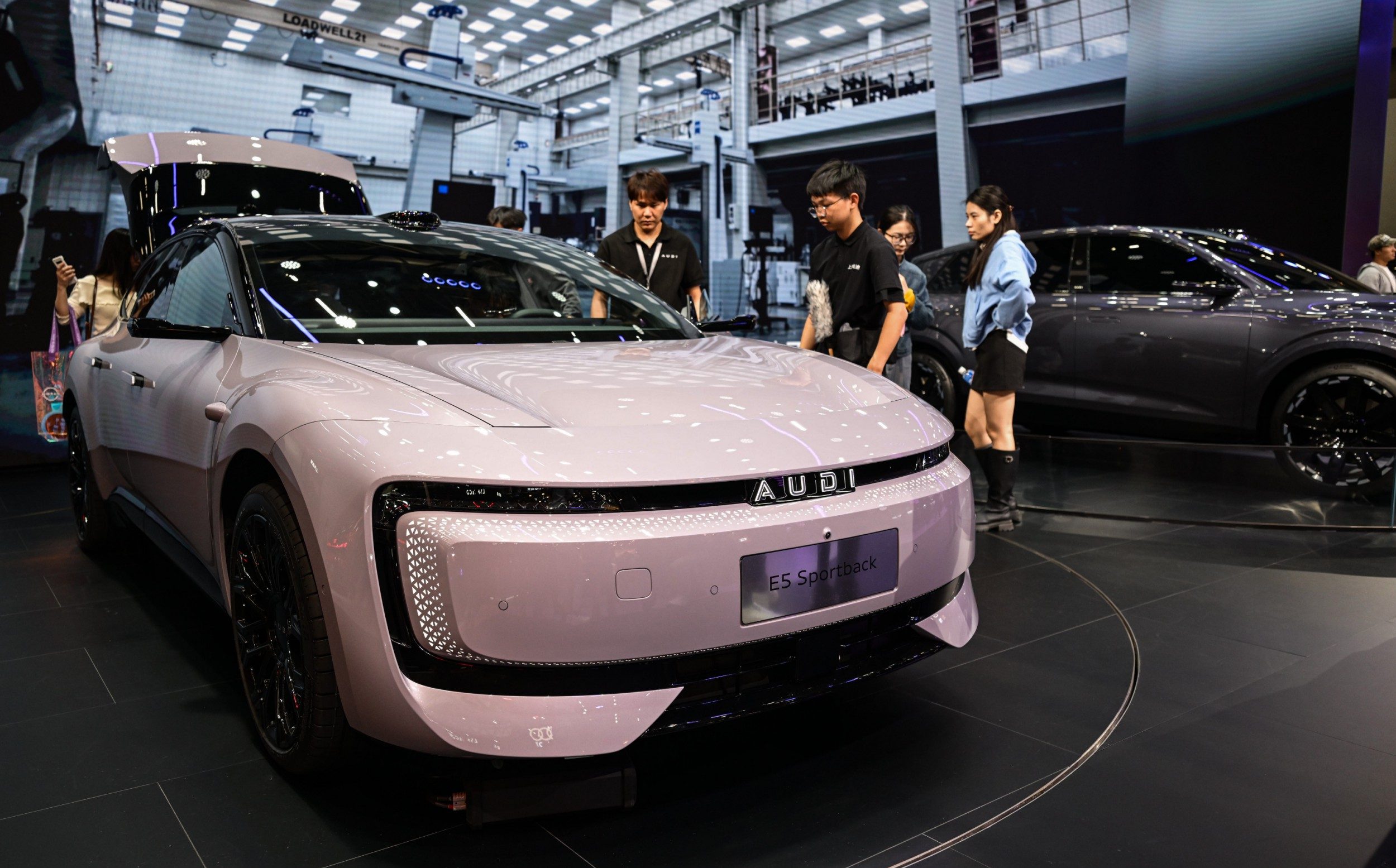
The Audi E5 Sportback earned incredible reviews in Germany, where it cannot be sold - John Ricky/Anadolu via Getty ImagesOld factories, new uses
Chinese-made cars with German logos are unlikely to flood European showrooms any time soon, however, because Brussels is moving to stem the tide of imports.
The EU has already put tariffs on Chinese EVs and has been negotiating minimum prices. The next step is a “made in Europe” policy, which will bestow financial favouritism on cars built inside the bloc.
This has pushed the Chinese to develop their own version of VW’s China policy: a kind of “made in Europe, for Europe”.
Rather than build factories, they are buying up idle European capacity.
“There is no time to start a greenfield plant today,” Alfredo Altavilla, a BYD adviser, told Reuters last month. “All you can do is find a brownfield [existing site], take it over and refurbish.”
European giant Stellantis, owner of brands such as Vauxhall and Peugeot, has offered factory space to Dongfeng and Leapmotor. Japanese carmaker Nissan has sold a Spanish factory to Chery and is also poised to hand over further capacity in Sunderland.
VW, too, may look at this. The company is said to have surplus capacity of half a million units at its European factories. “We cannot remain competitive in the global market with underutilised factories,” a spokesman says.
“It would be very easy to reduce the engineering capabilities and headcount, and to produce cars in Germany that are designed and engineered in China,” says Ferdinand Dudenhoeffer, of Germany’s Centre for Automotive Research.
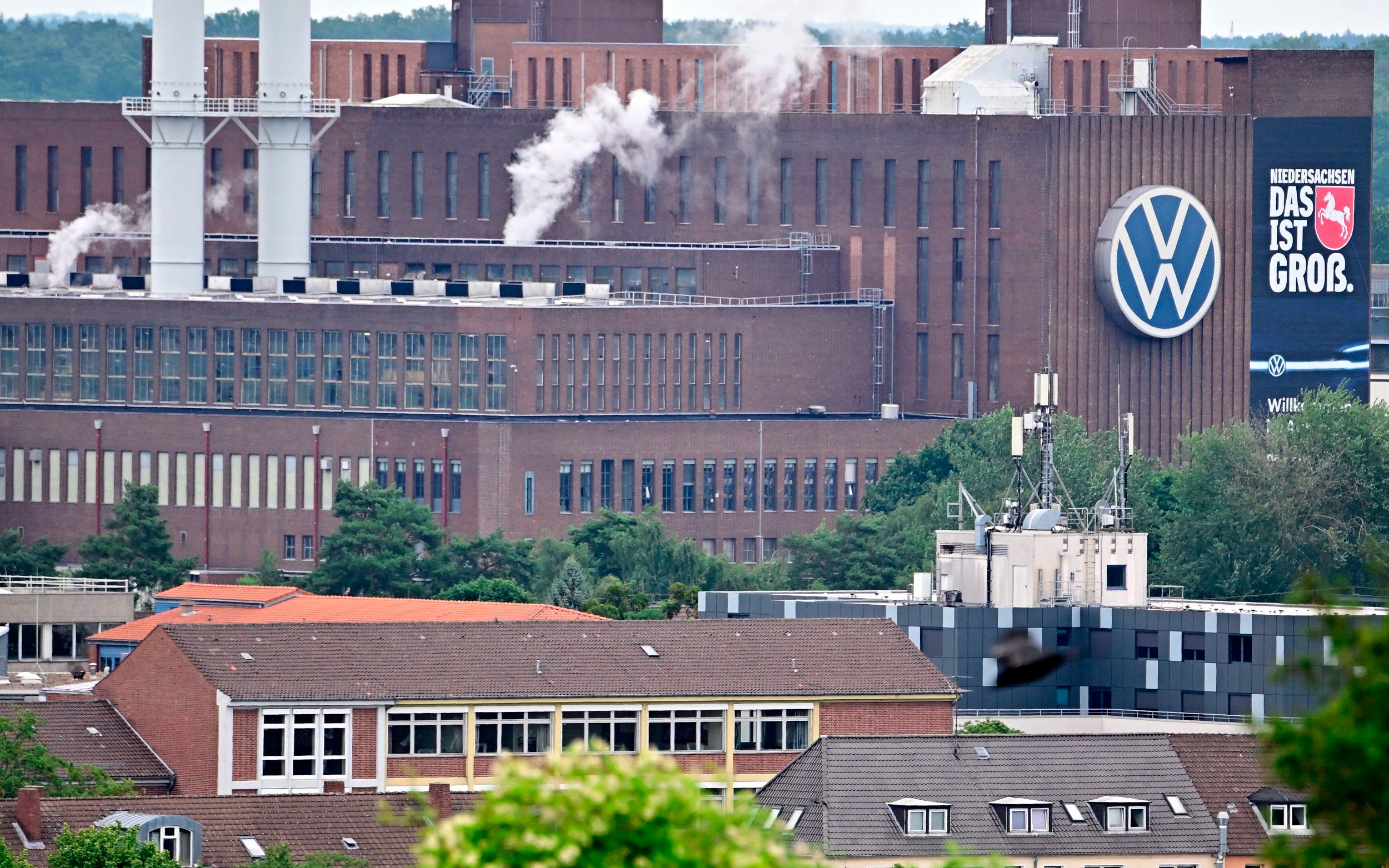
Volkswagen’s Wolfsburg plant employees 60,000 workers and produces more than 550,000 cars - Tobias Schwarz/AFP via Getty Images
VW has firmly rebuffed German media reports that it may offer some of its assembly lines to its Chinese partners SAIC and XPeng.
XPeng, for its part, has reportedly described Volkswagen’s German sites as “a little bit old”, and potentially unsuited to its modern designs and processes.
There may be another potential saviour for VW’s under-used plants.
With Germany spending hundreds of billions of extra euros on defence this decade to meet the threat from Russia, carmakers and their suppliers are eyeing an opportunity to switch to military production.
Reports in May suggested the car giant was in talks with Israeli firm Rafael Advanced Defence Systems about retooling a plant in Osnabrück to make military vehicles for Israel’s Iron Dome missile defence shield.
VW admits it is talking to defence companies about Osnabrück, but won’t say which ones.Bloomberg reported last week that the Qatar Investment Authority, a 10pc shareholder in Volkswagen, had blocked the Rafael deal.
VW has also reportedly discussed handing over the Osnabrück plant, whose 2,000 workers seemingly face a 2027 use-by date, to Franco-German defence giant KNDS, which makes the German-designed Leopard 2 tank.
There is a cultural wariness around VW’s involvement in defence, given its history as a supplier to the Nazi regime. VW says it might work with defence companies, but rejects speculation that it might make weapons.
Shrinking to survive
Offering the factory floor to China or the military is a compromise that Germans may have to swallow. The country’s carmakers are in a bind: they cannot outcompete the Chinese, but its unions and politicians won’t countenance plant closures.
VW is even more hemmed-in than rivals. While BMW is planning to cull 10,000 jobs and Mercedes another 5,500, VW is hamstrung by the Volkswagen Act of 1960. This gives unions and Lower Saxony’s government the final say over big decisions – and they are highly resistant to change.
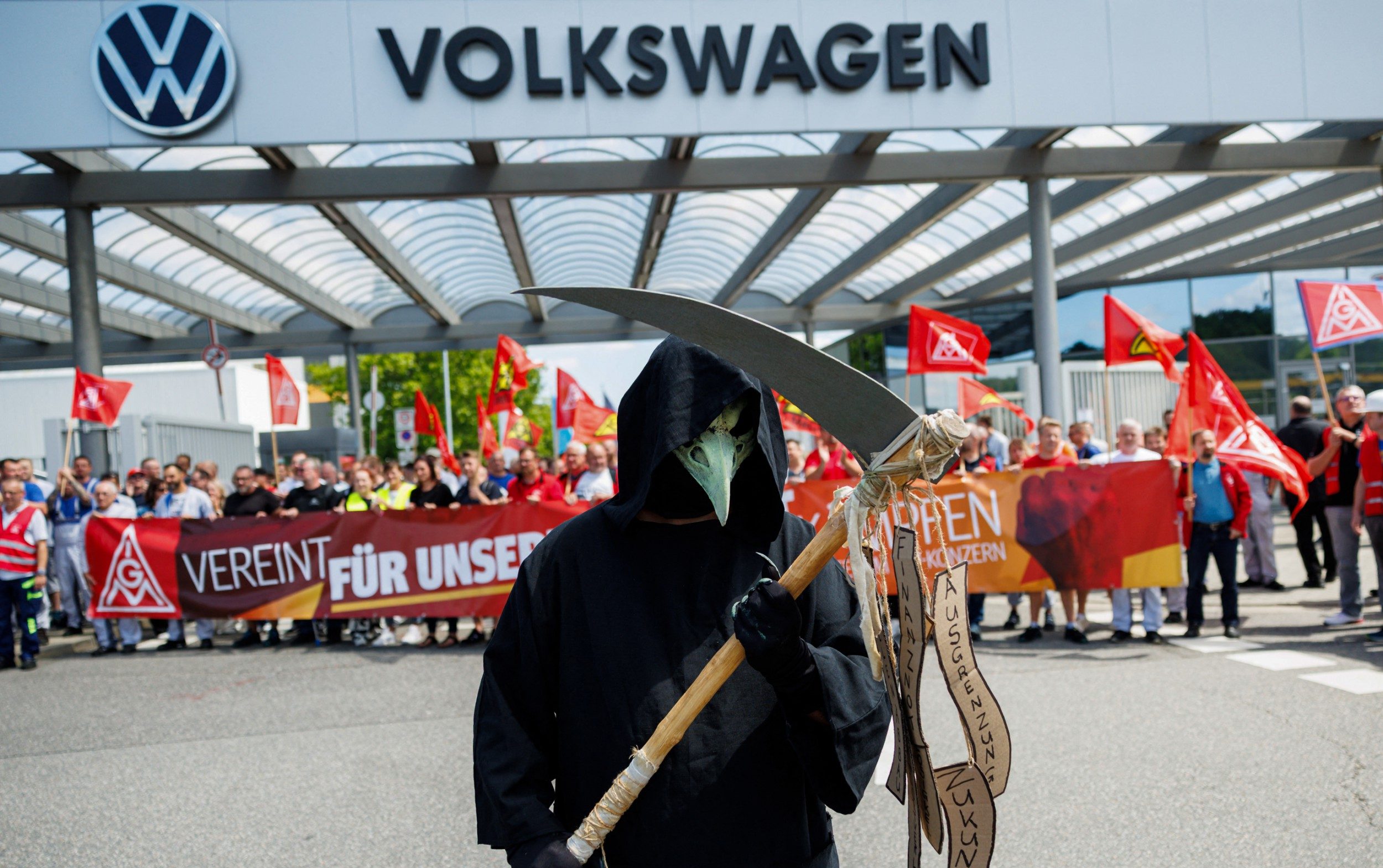
VW’s factory workers are up in arms over the prospect of another 50,000 job cuts - Jens SCHLÃTER / AFP via Getty Images
There are some things Blume can push on with, such as reductions to model line-ups and production rates. VW is already cutting production from the pre-pandemic level of 12 million cars per year to nine million, and may halve the range of models.
He has already managed to cut its factory operating costs by a fifth, about half of which came from personnel-related savings.
“Blume is doing everything right and trying to cut the fat,” says automotive analyst Schmidt. “But the trade unions still have their head in the sand, unfortunately, and are preventing cuts from taking place.”
VW insiders say they sense broad support within the supervisory board on the need to act. And forBlume, the maths is straightforward.
VW has a 20pc cost disadvantage compared to rivals. With most of its costs related to labour, this equates to a reduction of about 50,000 roles. This would take total job cuts to 100,000, when earlier rounds are included.
That could be just the beginning. According to Raasch, one in four jobs in Germany’s car industry will be gone within a decade on current trends.
If VW were to cut 50,000 jobs, says the Centre of Automotive Management’s Bratzel, three to five times that number would be lost in the surrounding ecosystem, “ranging from suppliers and logistics companies to hotels and bakeries”.
Lower Saxony’s economy minister, Dirk Panter, says he is open to the Chinese using some factory capacity, admitting the government cannot “ignore reality” forever. His administration is reportedly even considering taking a stake in the Osnabrück plant.
Sander Tordoir, of the Centre for European Reform, says if VW plans to let Chinese partners into its factories, it has to set the terms. This should include requirements to employ German workers and engineers and to transfer technology.
“Otherwise, the fear would be that insofar as Chinese car companies acquire or build plants in Europe, they will be relatively low value-add assembly plants for Chinese embedded content.”
Raasch believes if VW and other German carmakers manage this correctly, they can turn China’s playbook back on itself: learn through joint ventures, and then surpass their teachers.
For that to work, “the dependence on the partners can’t become permanent. It has to stay as a transition phase. And VW has to use that to stand on its own feet again”.
That will be easier said than done. Blume has to shift the narrative from job cuts and plant closures to innovation and reinvention. And he has to do it before the Chinese companies put VW out of business.
Dudenhoeffer says VW’s future might lie largely outside its birthplace.
Engineering VW cars in China will cut costs and could make them more competitive on price and technology, he says. “At the moment this strategy isn’t doing very well. Probably we still have some time to wait.”
Others fear this will spell disaster for Germany and Europe more broadly. Moritz Schularick, of the Kiel Institute, says if the country cannot retain its technological autonomy, then “China and the USA will devour Europe, piece by piece”.
Bratzel argues VW can’t solve this problem by itself, however. His vision is of a “Germany pact”, in which the carmakers, unions and politicians put down their cudgels, set aside their short-term interests and try to rescue the industry.
Blume’s concern is more immediate: VW’s bottom line and its future.
The chief executive says he is doing everything in his power to help VW survive.
But as he himself recently put it: “Our business model of past decades no longer works. Not at Volkswagen. Not for the German automotive industry. Not for Germany as a whole.”
Source: “AOL Money”
