


Rio Tinto doubles down in Argentina with new lithium plants
Rio Tinto doubles down in Argentina with new lithium plants
0
Share

By Lucila Sigal Thu, October 29, 2026 at 12:06 AM UTC
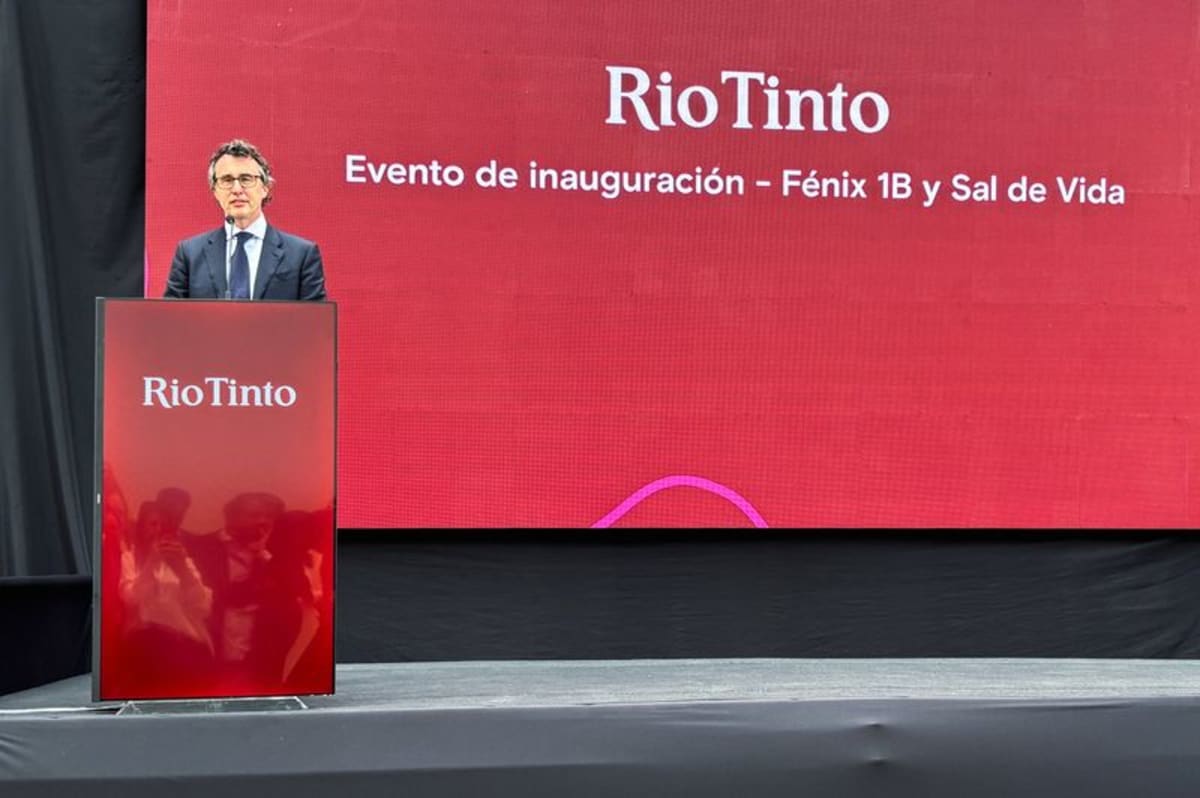
(Corrects production figure in paragraph 3 to clarify that output in Argentina is expected to reach 160,000 metric tons by 2028, not 200,000 metric tons)
By Lucila Sigal
SAN FERNANDO DEL VALLE DE CATAMARCA, Argentina, Oct 28 (Reuters) - Rio Tinto inaugurated two new lithium plants in Argentina's mountainous Catamarca province on Wednesday, marking a key step in its push to build a large-scale lithium business based on direct lithium extraction, or DLE, technology.
With a $1.4 billion price tag, the new Sal de Vida plant and the Fenix 1B expansion project will add 25,000 metric tons of lithium carbonate equivalent annually, to produce the key battery-making ingredient for electric vehicles.
Its flagship Rincon project in Argentina's Salta province is expected to produce 60,000 metric tons per year of LCE. The company aims to increase its total Argentine output to 160,000 tons and global production to 200,000 tons by 2028.
"We live in an era in which the world needs more lithium. At Rio Tinto, we have set ourselves the goal of reaching 200,000 tons of annual production capacity, with opportunities to raise that figure much higher," Rio Tinto CEO Simon Trott said.
Both Rincon and Fenix use the innovative DLE technology, a process backers say is more sustainable than open-pit mines and evaporation ponds and drastically cuts production time.
Advertisement
Rio Tinto, the Anglo-Australian miner, is positioning itself among the first major companies to build a large-scale lithium business around DLE, despite lingering questions over costs, scalability and long-term performance.
French miner Eramet has also used the technology since late 2024 in Argentina at its Centenario Ratones project in Salta.
Argentina is part of South America's "Lithium Triangle" with Bolivia and Chile, a region that holds 60% of the world's reserves of the metal.
Chile, the second-largest producer globally, has declared lithium a strategic resource. It promotes a public-private model that industry figures say can limit investment, while Bolivia maintains strict control over its reserves.
Under President Javier Milei, Argentina is seeking to position itself as a leading investment destination through market-friendly reforms and a tax incentive scheme, which offers tax, legal and foreign-exchange benefits for 30 years to projects worth more than $200 million.
Projections from Argentina's Mining Secretariat show the country could overtake Chile by 2029 and reach production of 573,000 metric tons of LCE by 2035.
(Reporting by Lucila Sigal; Writing by Anthony Esposito; Editing by Will Dunham)
Source: “AOL Money”
