


England still have no identity and that could cost Borthwick
England still have no identity and that could cost Borthwick

Gavin MairsSat, July 18, 2026 at 7:00 AM UTC
0
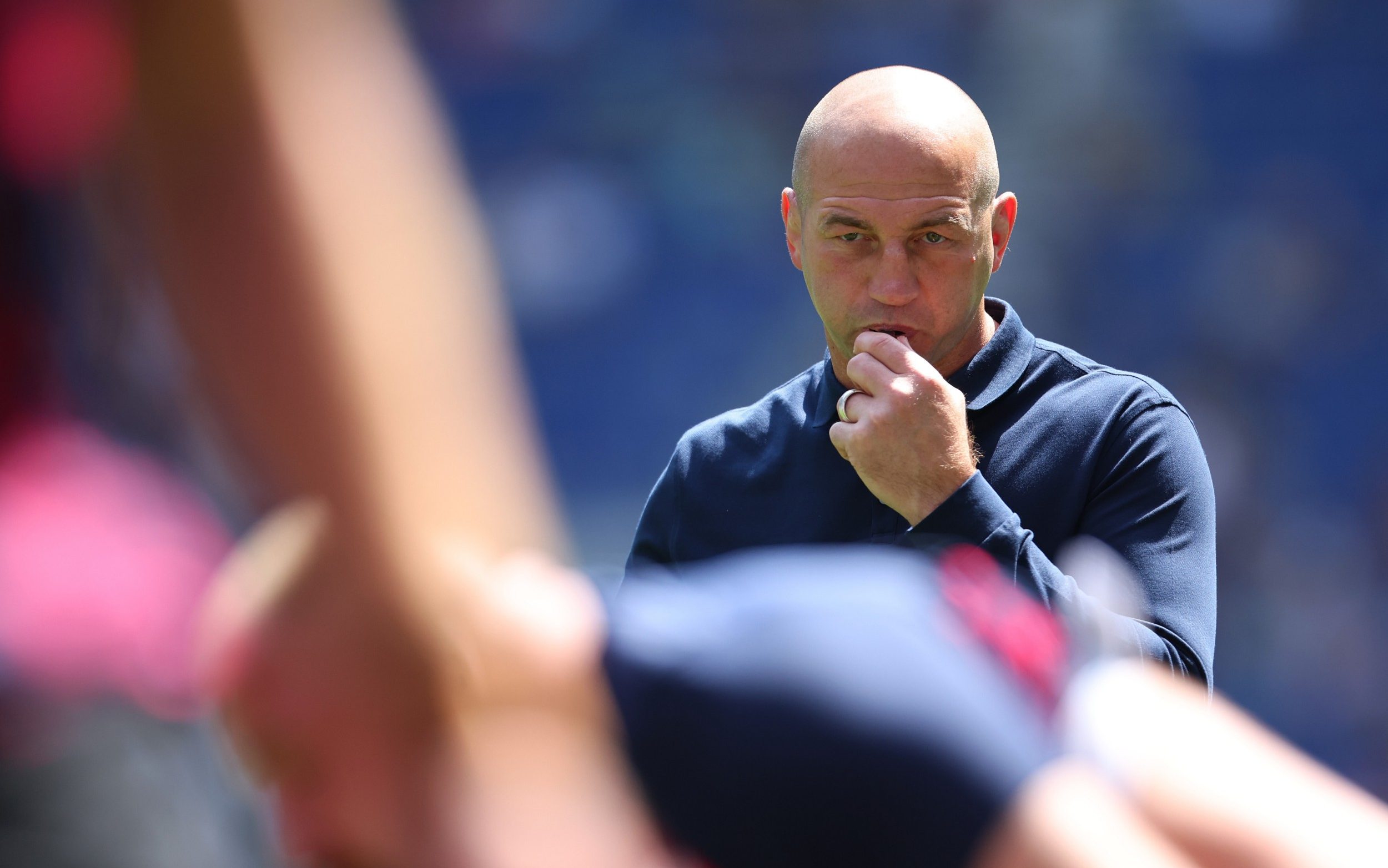
Steve Borthwick does not yet know his best England team - Ed Sykes/Getty Images
What is the identity of English rugby? When Eddie Jones took over as England head coach in 2016, the Australian seemed to have a clear idea.
It was hardly rocket science. Jones, when he had been the head coach of Australia, had seen first-hand the brutal brilliance of Sir Clive Woodward’s England when they had won the 2003 World Cup final against his Wallabies in Sydney.
Jones felt that after England’s 2015 World Cup humiliation, he had to focus on a back-to-basics strategy prioritising traditional set-piece strength, relentless aggression and work rate; he wanted to create a pack of his own “white orcs on steroids” as the New Zealand press had once described Martin Johnson’s side.
“We have a lot of work to do but with the talent we have, I’m confident that we can get the fear factor back of having that dominant set-piece,” said Jones at the time.
Ben Darwin, a former Australian prop who had been coached by Jones, was less certain, however. “English rugby is not set up to be successful,” Darwin said. “If the RFU can’t change to a system that Eddie thinks will be successful, then one of them will break – and it won’t be Eddie.”
But Darwin was wrong. Six years later, it was Jones who broke, as Rugby Football Union chief executive Bill Sweeney sat in the stands at Twickenham as England lost 27-13 to South Africa in November 2022 and decided enough was enough.
When Steve Borthwick was appointed as Jones’s successor, with just one Six Nations campaign to build a squad for the 2023 World Cup, time was so short that he had little option but to construct a simple game plan based on set-piece, kicking and defence, and assemble the most experienced players available to deploy it.
The rugby might have been a tough watch for England’s supporters, but Borthwick’s side were only denied a place in the final in Paris by a late penalty by Handre Pollard for the eventual winners South Africa.
Yet four years on from Jones’s dismissal, English rugby is once again in a similar position at the same point of the World Cup cycle, searching for an identity and with uncertainty over the head coach’s future.
The RFU’s post-Six Nations review into the campaign that yielded just one win offered support to Borthwick through to the World Cup in Australia next year, but the reality is that there is no cast-iron guarantee. The situation will be reviewed again after Saturday’s Nations Championship match against Argentina in Santiago del Estero.
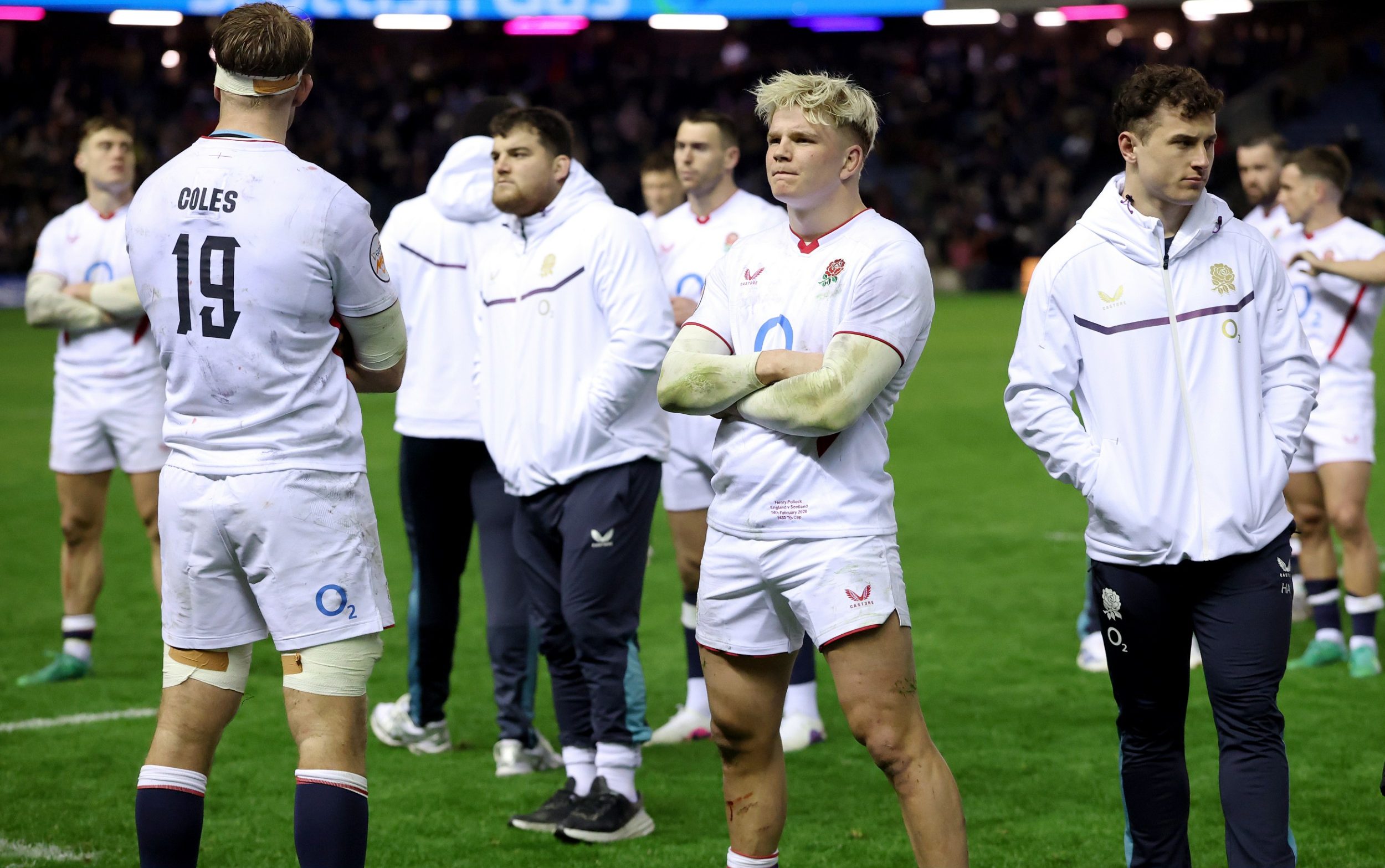
England suffered a disastrous Six Nations that yielded just one win - David Rogers/Getty Images
The country’s oldest continuously inhabited city was founded in July 1553, by Francisco de Aguirre, a Spanish conquistador, and is affectionately known as the “Mother of Cities” because it served as the base for expeditions that founded many other in the region. It is here that English rugby finds itself at another crossroads. Should Sweeney stick or twist?
An opportunity lost
Borthwick spent the first two years of this World Cup cycle attempting to build a new-look squad that reflected their strengths. Without the power athletes that Woodward was blessed with, mobility was made the priority. Borthwick felt that if England did not have a carrying power, he would pick a side who could run.
The new £264m eight-year professional game partnership in 2024 between the RFU and Premiership clubs was meant to have provided the foundation stone for a bold new era, stabilising the clubs and improving national team performance.
Borthwick was given greater control over players who were offered enhanced elite player squad contracts and the final say in medical matters, but it stopped short of controlling playing minutes. It felt like an opportunity lost.
In the meantime, the nature of the Prem, as it is now known, moved in a direction that saw it evolve into an entertaining product, but one that has become less of a proving ground for Test rugby. That was at first a result of the reduction in the salary cap following the financial impact of the pandemic, which also made the clubs less competitive in Europe, but latterly also a change in style, with a greater emphasis placed on attack rather than defence.
Ben Earl, the England flanker, said the difference between Test rugby and the club game was both physical and mental.
“Everything just seems like it is being demanded 10 per cent more, 10 per cent faster, and that’s not just physical. That’s in your in your mind as well,” said Earl.
Advertisement
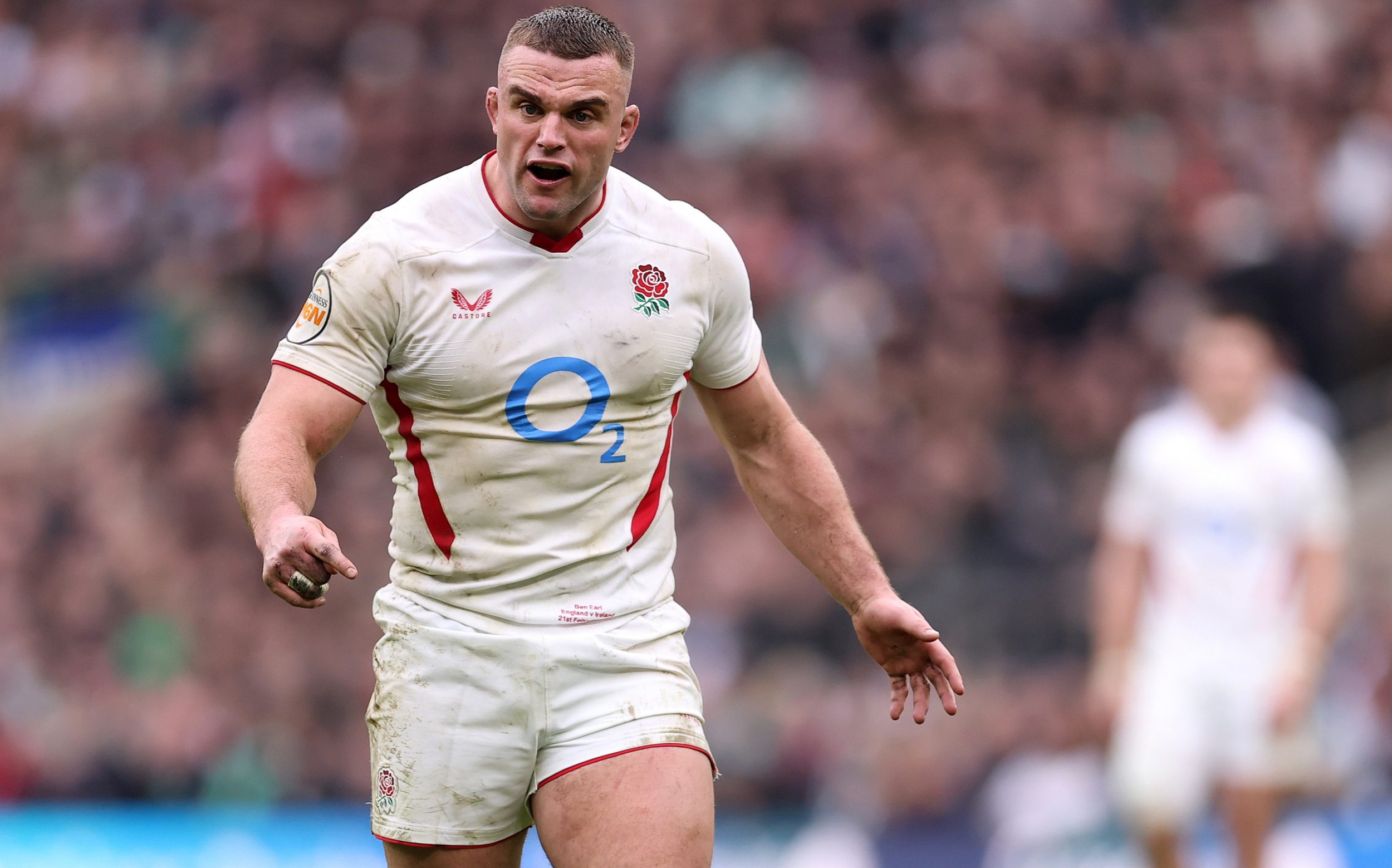
Ben Earl says there is a huge difference between the club and international game - Warren Little/Getty Images
“Which is why I’m always hesitant to say Premiership form or playing in the Premiership transfers straight into international rugby because at times it can almost feel like a different sport with how quick the game is and what gets asked of you.
“That’s why we train like we do in terms of in camp because you have to bridge the gap between the Premiership and international rugby. It takes different players different times. Test match animals like Sam Underhill and Maro Itoje are players who find so much more in their game when they play for England, finding a new level having already played unbelievably well for their clubs.
“The training we do definitely helps. The preparation we do, the work on the mental side of the game, the demands that we put ourselves through mean that come Saturday you’re normally pretty much ready to go. Inevitably, when you go into a Six Nations, there is always an evolution in your game. But I think as you play more, you get a little bit more used to it. But it’s certainly a tough thing to do when you first start out.”
The analysis backs up Earl’s sentiment. This season, 40 per cent of games were won by 20 points or more (it was 29 per cent in the United Rugby Championship) and the winning margin in the Prem was 7.4 points this season, which is as high as it has been in 26 years.
The dominance of attack over defence is reflected not just in record levels of try-scoring, but tackle success vs expected tackle success was much lower in the Prem than in any of the other leagues this season.
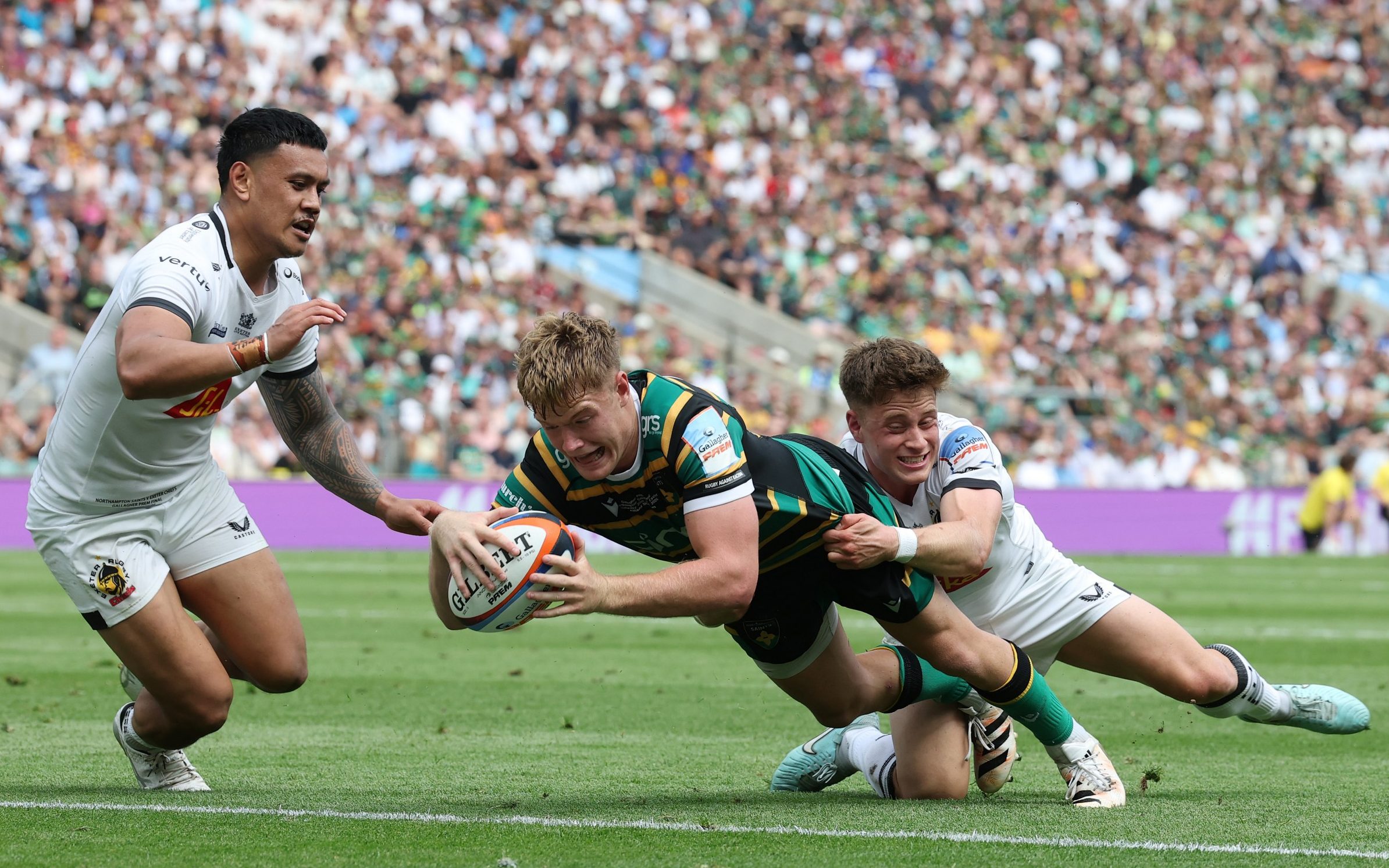
Fin Smith scores a try for Northampton in a Prem season that saw record levels of scoring - David Rogers/Getty Images
There was also little emphasis placed on players winning defensive contestable kicks in the Prem. This season, 47 per cent of contestable kicks were retained by the attacking team, which is higher than any of the leagues or competitions around the world. Refereeing in the Prem also differs from the Top 14 and Test matches. This season, 67 per cent of jackals were won as penalties (not turnovers), which is higher than in any other league.
For context, only 50 per cent of jackals were won as penalties in the Top 14 and 51 per cent in this year’s Six Nations. This means different defensive breakdown skills are being rewarded in the Prem. Players are looking for jackal penalties that might not be rewarded at Test level, rather than turnovers or counter rucks.
In the past 12 months, only 12 per cent of penalties in the attacking half have been taken as kicks at goal in the Prem. This is much lower than in Test rugby (23 per cent) and Top 14 (29 per cent). Prem teams kick to touch (71 per cent) and tap (15 per cent) more than in any other league.
The age-grade national sides continue to develop talent with great potential. But with the RFU’s restriction on picking only home-based players, the question has to be asked whether the Prem in its current iteration is giving the players a broad enough band of the type of rugby that is being played, and whether it assists their long-term development and ability to adapt to Test rugby?
Borthwick’s questionable decision-making
Borthwick’s coaching is also under scrutiny. The system may not be set up to maximise England’s best hope of success, but his decision-making has at times been questionable, both in selection and tactics.
Marcus Smith and then Fin Smith were given opportunities to lead the attack. And after a dalliance with bringing back George Ford, Fin Smith looks like he has the keys to No 10 for the World Cup.
But during the Six Nations campaign, it was not until the narrow defeat by France that England looked like they were finally backing their attacking words with their deeds. The midfield problem that has troubled England coaches for two decades has not been resolved. The decision to stick with Tommy Freeman as an outside centre has been about trying to get more power athletes into the side. Ollie Lawrence and Max Ojomoh have come and gone.
That Benhard Janse van Rensburg is now English-qualified has added to Borthwick’s “power” options in the midfield, as has the return to fitness of George Martin and Immanuel Feyi-Waboso. Fin Baxter, who is unavailable because of a foot injury, is perhaps the only player whose impact could be critical in the build-up to the World Cup next year.
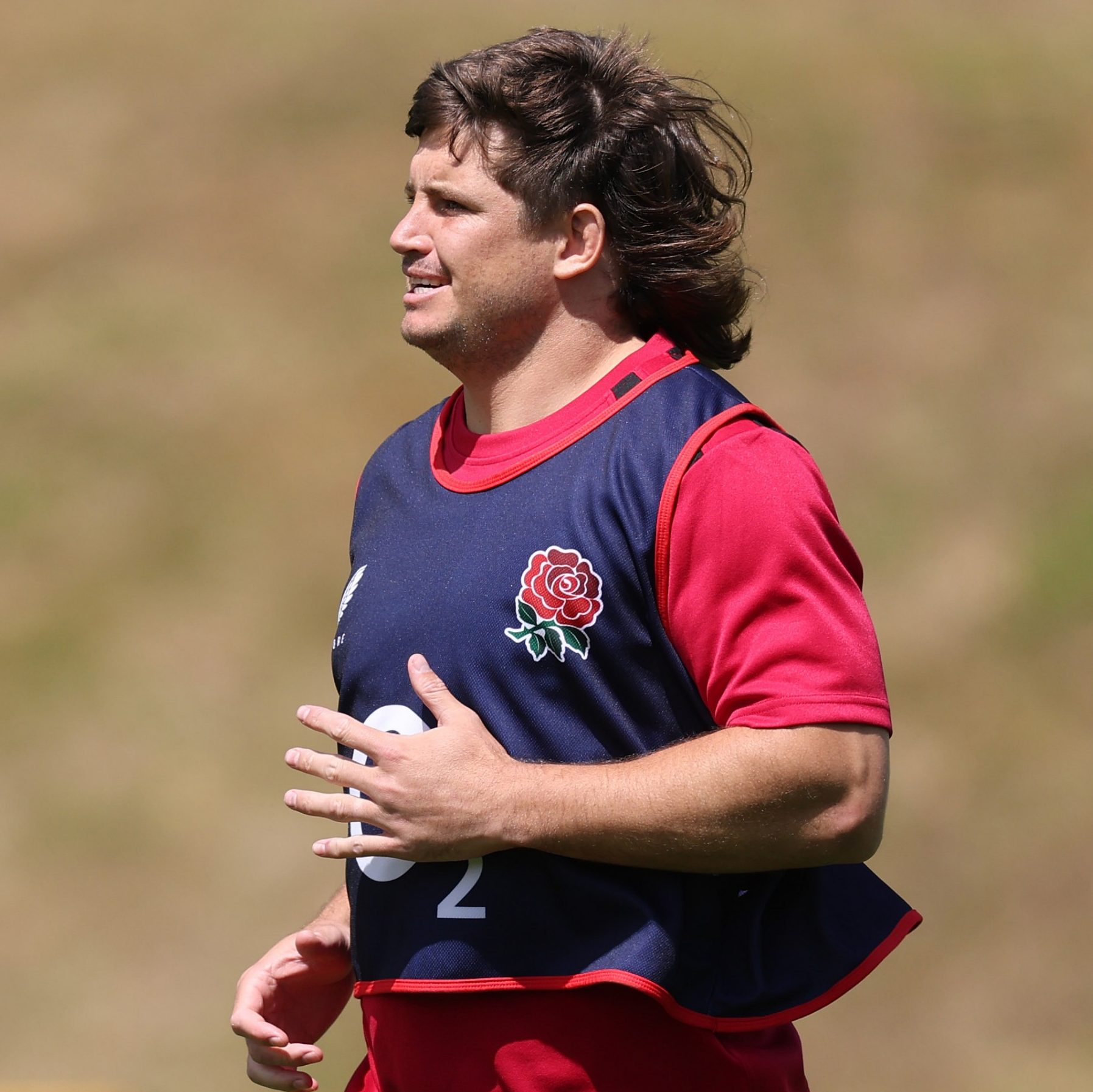
Benhard Janse van Rensburg has added to Borthwick’s ‘power’ options in midfield - Warren Little/Getty Images
Which brings us back to the question of English rugby’s identity. In England’s record defeat against Ireland at the Allianz Stadium in February, Borthwick opted to play three openside flankers in his back row, Earl, Tom Curry and Henry Pollock. In an effort to run Ireland off the park, the pack was found wanting in the physical exchanges.
But the shift back to power athletes has begun since then. The form of Alex Coles and Martin’s return from long-term injury has allowed Borthwick to switch Ollie Chessum to the back row. Noah Caluori has enjoyed a breakthrough season. If England can also get Feyi-Waboso into the game more often, there is optimism that with greater power in this side, as well as mobility, England can rediscover an identity that is truer to themselves.
Which is why this game in temperatures expected to reach 35 degrees and against an Argentine side attempting to back up the heroics of their football counterparts should prove a perfect moment to test their resolve. Winning away from home, just as Woodward’s “white orcs” did so magnificently on their tour of New Zealand and Australia in the build-up to their 2003 World Cup triumph, defines a team.
England traditionally produce their best at World Cups when players have had the benefit of a two-month training camp. Whether Borthwick’s England get there is likely to be defined by their performance in the “Madre de Ciudades”.
Source: “AOL Sports”
