


10 must-watch movies that capture America in times of profound change
10 must-watch movies that capture America in times of profound change

Amy Nicholson, Mark Olsen, Joshua Rothkopf, Josh Rottenberg, Glenn WhippMon, June 29, 2026 at 10:00 AM UTC
1
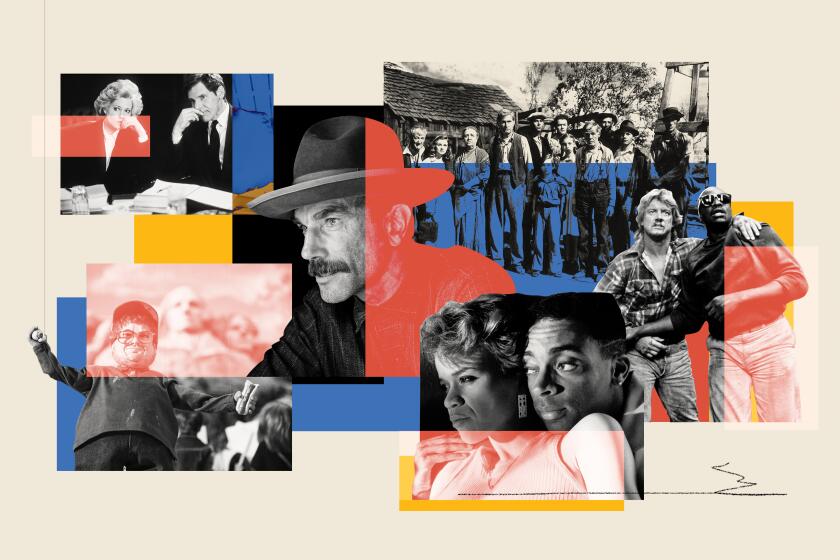
(Illustration © Gibson Kochanek; images from 20th Century Fox, Paramount, Shout Factory, Universal)
Can you tell the story of America in 10 movies? Maybe so — at least a version of it — if you stick to moments of serious national friction and those rare instances when a filmmaker meets the mood with a true vision. If you want tearjerkers about red, white and blue triumph, this is not your list (although the Space Race drama “The Right Stuff” always does the trick). Meanwhile, our current state of disunity and division will find its own expressions in time; start with “Civil War,” though it’s a bit too soon. Instead, we thought about historical pivot points and built a list of classics, along with a few alternatives for each title.
The Great Depression
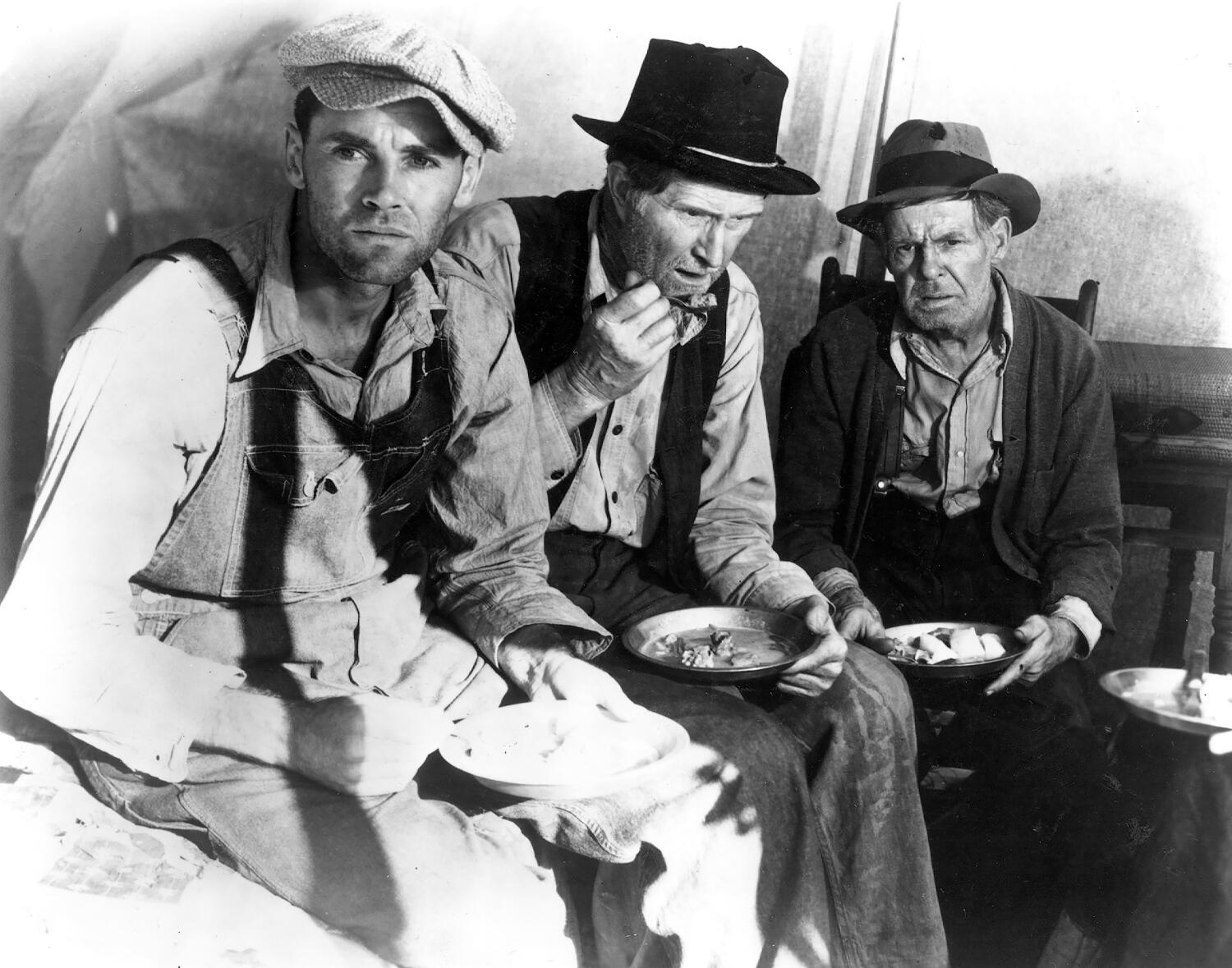
Henry Fonda, left, in the 1940 film "The Grapes of Wrath," directed by John Ford.(20th Century-Fox)‘The Grapes of Wrath’ (1940)
America is a broken place in John Ford’s poetically charged adaptation of the Steinbeck novel: a downbeat landscape of Oklahoma dust storms, long shadows and the teetering sight of a car turned into a truck transporting a family westward. This will always be one of those essential movies about a particular national dream — not just a myth — of emerging from economic catastrophe and being reborn in the promised land of California. Ford, with the instincts of a showman, foregrounded hope on the horizon via inspired performances by Henry Fonda and Jane Darwell’s pragmatic Ma Joad getting the final word (“We keep a’coming…”). But there is still so much darkness in “The Grapes of Wrath,” especially in its scenes of John Qualen’s Muley Graves, crumpled on the ground, suddenly a squatter on his own piece of land. He’s no match for the bulldozers. As long as the idea remains that property gets its purpose from those tending it, working it, nourishing it and dying on it, the film will never become a relic. Its binding values of labor and community remain relevant, even if today’s Hollywood rarely speaks to them. — Joshua Rothkopf
See also: “Modern Times,” “Sullivan’s Travels,” “Bonnie and Clyde”
Post-war optimism‘The Best Years of Our Lives’ (1946)
World War II ended with ticker-tape parades and soaring expectations. William Wyler’s sweeping drama arrived just as America was beginning to reckon with what coming home actually meant. Harold Russell, a real-life veteran who lost both hands during the war, plays a sailor struggling to imagine a future with the woman he loves. Dana Andrews is a decorated bombardier who returns to the same soda fountain job he held before the war, discovering that military heroism doesn’t necessarily translate into peacetime opportunity. The movie became one of the biggest hits of 1946 because it understood a challenge facing millions of Americans: The war had given the country a common purpose but peace meant each person had to find their own. Yet for all its honesty about that dislocation, the film remains remarkably hopeful. Its faith that people can rebuild their lives and start over feels almost radical today. Seen from the distance of eight decades, it feels like a dispatch from a country that had just survived a catastrophe and still believed its best days lay ahead. — Josh Rottenberg
See also: “It’s a Wonderful Life,” “Miracle on 34th Street,” “Giant”
Capitalism, unchecked‘There Will Be Blood’ (2007)
“I drink your milkshake — I drink it up!” Oil man Daniel Plainview’s deranged metaphor, allegedly taken from congressional transcripts from the 1920s Teapot Dome scandal in which Interior Secretary Albert Fall defended the practice of directional oil drilling, a.k.a. drainage, became a catchphrase when “There Will Be Blood” arrived in 2007. Elon Musk probably has a T-shirt in the back of a drawer emblazoned with the line. It epitomizes the American ethos of extracting resources that belong to someone else and then brutally bragging about the beatdown. Paul Thomas Anderson’s movie is part history lesson, part horror film, which, when it comes to chronicling the American experience, feels like the perfect blend. The oil man’s exploits take place more than a century ago, but seem particularly relevant now with Musk newly minted as the world’s first trillionaire and income inequality rapidly widening. Plainview confesses, “I have a competition in me. I want no one else to succeed.” It neatly sums up the endgame in which we find ourselves — and his vanquishing of the preacher Eli speaks to what we worship in the United States. He’s finished and sometimes it feels like we are too. — Glenn Whipp
See also: “The Wolf of Wall Street,” “WALL-E,” “Sorry to Bother You”
Read more:He’s made the most incendiary movie of the year. But Paul Thomas Anderson remains an optimist
Post-Vietnam/Watergate cynicism‘Nashville’ (1975)
Could one movie capture the breadth of emotions around this year’s 250th anniversary celebrations as well as Robert Altman did the Bicentennial? As the country was still reeling from the assassinations and discord of the 1960s, the despair of Vietnam and the scandals of Nixon and Watergate, there was a soul-baring uncertainty to what it even meant to be an American. With 24 main characters interwoven around the town of Nashville, home of country music and intersecting political undercurrents, the film tries to make sense of the chaos. While the conspiracy thrillers of the 1970s are seen as the most direct response to the moral malaise of the moment, Altman finds an unexpected way to gild his innate skepticism with a light filigree of hope, a complex quilt of characters capturing the contradictions inherent in the American identity. And yet as cynical and beaten-down as the film’s viewpoint can often be, there is still a spark of decency and perseverance. That is the America that Altman celebrates, even as he lets no one off the hook. Few films capture the hum of life in all its maddening beauty quite like this one. — Mark Olsen
See also: “Blow Out,” “The Conversation,” “The Parallax View”
Media domination‘Network’ (1976)
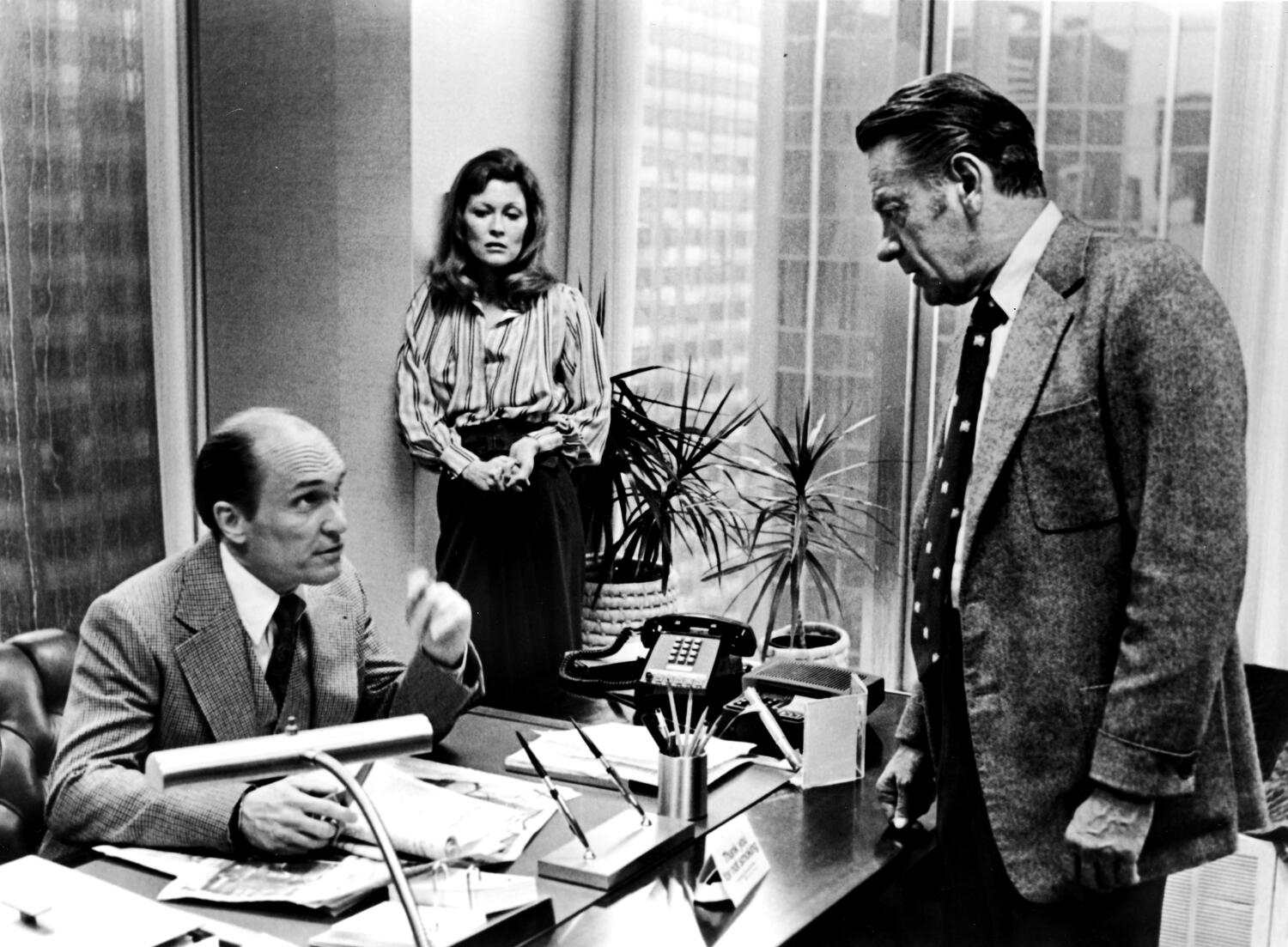
Robert Duvall, Faye Dunaway and William Holden in the 1976 movie "Network," directed by Sidney Lumet.(MGM Studios / Getty Images)
Much has been made over the years about how prescient this film was, as if screenwriter Paddy Chayefsky and director Sidney Lumet saw the constrictive dangers of corporate consolidation in the distance and came back to warn us. But if these rumbling premonitions have remained true across multiple eras of an ever-evolving media landscape, have we really learned anything? Perhaps we really do live in a “demented slaughterhouse of a world,” as the unhinged newsman Howard Beale says in one of his apocalyptic broadcasts, and have all along. Maybe what “Network” nails most of all is apathy: that even the most righteously committed can have their heads turned from their true goals and then struggle to get back on track. What may be most shocking rewatching the film today is the suspicion that some current media figures see the maneuverings of villainous executives played by Robert Duvall and Faye Dunaway and somehow think that they were the heroes of the story all along. Not even Lumet or Chayefsky would have predicted that. — Mark Olsen
See also: “Broadcast News,” “The Insider,” “Nightcrawler”
Gentrification and racial tensions
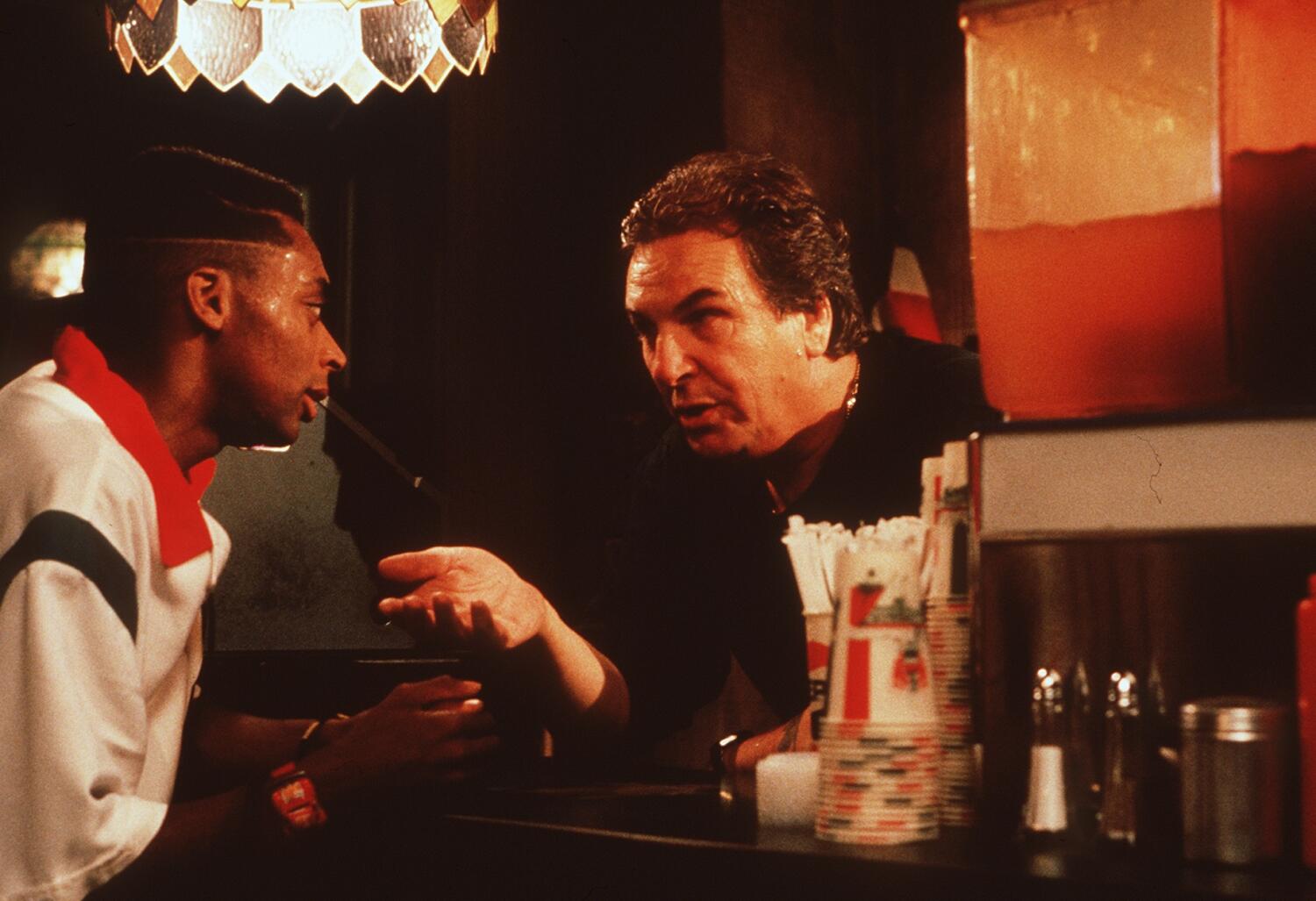
Spike Lee, left, and Danny Aiello in the 1989 movie "Do the Right Thing."(Universal Pictures)‘Do the Right Thing’ (1989)
Spike Lee’s masterpiece was met with hand-wringing when it arrived in theaters 37 summers ago, with white critics fretting how “urban audiences” would react to its shocking ending of brutality and angry protest. “If some audiences go wild, [Lee] is partly responsible,” critic David Denby wrote in New York Magazine. Nobody rioted. “Do the Right Thing” made some people uncomfortable because it told truths from a Black perspective that they did not want to accept. That unwillingness to have hard conversations and learn from them remains evident today as we prepare to celebrate our nation’s 250th birthday without an honest reckoning of the anguish that lies beneath the storybook version of America’s founding. The paradox is that Lee’s movie is itself that conversation, its characters engaging in a series of arguments, evenhanded and empathetic, about how race affects the lives we lead in America. Until our country engages in that dialogue, nothing will change. For a moment, the Black Lives Matter movement signaled a willingness to grapple with the past. But the pendulum swung and we’re back to days of “Driving Miss Daisy” denial. But “Do the Right Thing” remains with us, its urgency and relevance undiminished, waiting for an America open to listen and live up to its idealized aspirations. — Glenn Whipp
Advertisement
See also: “Get Out,” “12 Years a Slave,” “Fruitvale Station”
Read more:Spike Lee’s new Denzel Washington movie is much more than a Kurosawa remake
The rise of the yuppies
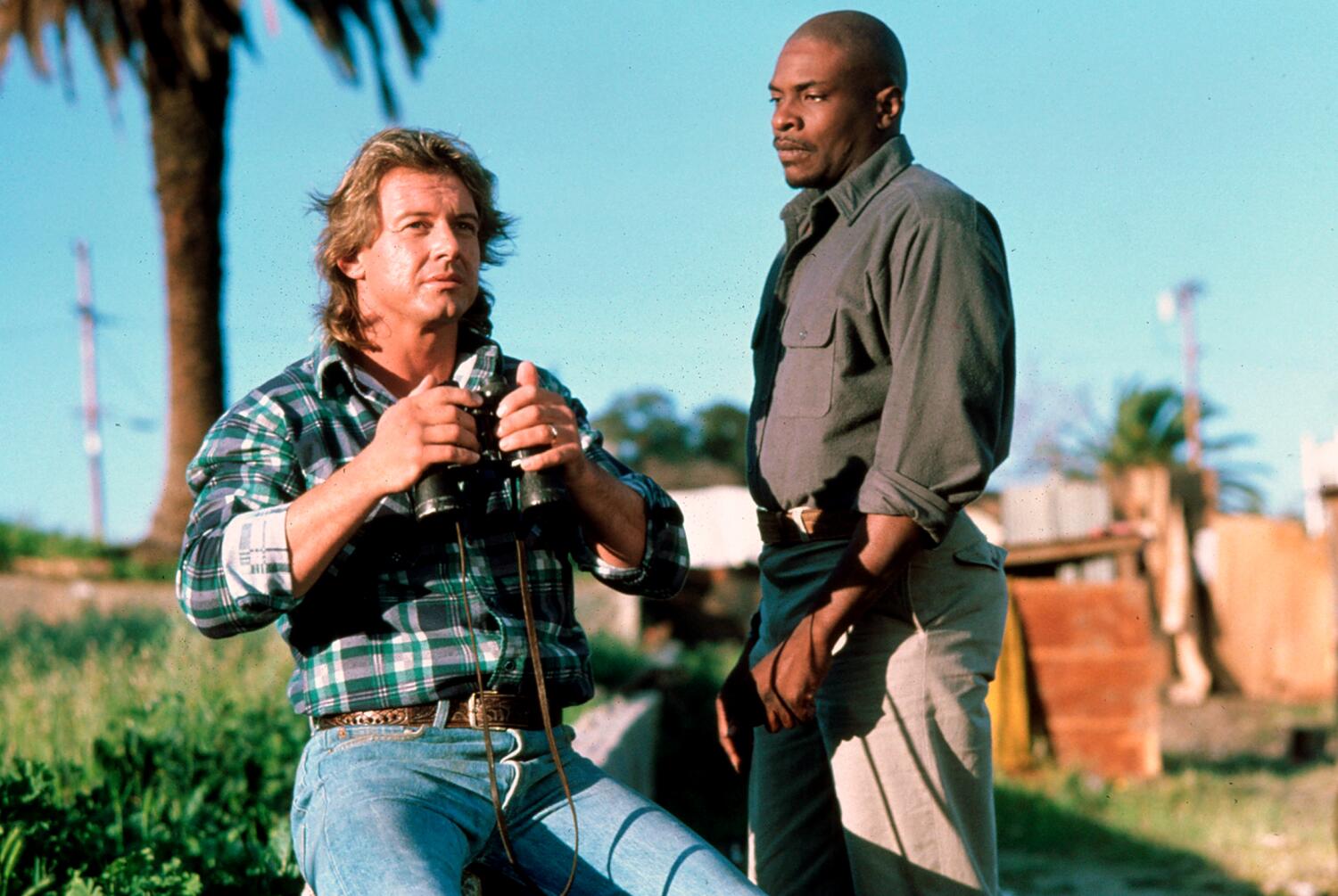
Roddy Piper, left, and Keith David in the 1988 movie "They Live," directed by John Carpenter.(Universal Pictures)‘They Live’ (1988)
“I believe in America,” the guy says, but we’re not in the private office of some all-powerful Corleone. Rather, this is a working man in a plaid shirt and denim. As the sun sets on his sad L.A. tent city (inspired by the real-life Justiceville), he only wants what everyone else wants: a hard day’s work for fair pay and the chance to get ahead. “It’ll come,” he says, serenely. He doesn’t know he’s in a John Carpenter movie — Roddy Piper was never put to better on-screen use — and that those keeping him down are, in fact, aliens hypnotizing us into an unseeing stupor as they carve up the world’s resources. Released at the tail end of Reaganomics, Carpenter’s most politically forward thriller now feels like a decoder ring for ’80s-era greed, detachment, complacency and ruthlessness. Carpenter meant us to to see his bug-eyed space invaders as yuppies. He also intended us to question whether we were selling each other out, just to join the “human power elite” for a tiny piece of pie. “They Live” looms just on the other side of appreciated. Many genre films say what our more prestigious dramas can’t about the creeping forces that are changing America; this one still feels like it’s getting away with murder. — Joshua Rothkopf
See also: “American Psycho,” “Invasion of the Body Snatchers,” “After Hours”
Read more:John Carpenter has been thinking about death lately. Not in the way you imagine
’80s women in the workplace‘Working Girl’ (1988)
Mike Nichols’ zeitgeisty hit opens on a shot of the Statue of Liberty hoisting her torch like a paycheck. Down by her green toes, Melanie Griffith’s Staten Island secretary Tess McGill ferries to Manhattan to type memos for important men. Tess has a job, not a career. But 1988 was the first year that female undergraduates outnumbered men on college campuses. Even without a degree, Tess is ambitious to climb the corporate ladder — once she swaps out her practical white sneakers for a pair of pumps. The script by Kevin Wade throws up hurdles of sexism and class snobbery, never sugarcoating how Tess’s male co-workers treat her like a blow-up doll. (Critics dismissed Griffith, too, until this performance earned her an Oscar nomination.) Yet note how her Ivy League-educated boss Katharine (Sigourney Weaver) isn’t immune to harassment either; she’s just mastered how to parry her colleagues’ advances. Fantastic as it is, “Working Girl’s” core flaw is that Tess can’t snag her seat at the conference table until she yanks Katharine out of it. Weaver said that when she showed the script to real-life working girls on Wall Street, they asked, “This awful secretary steals your man, wears your clothes, takes your office — who’s going to sympathize with her?” Millions did and still do. — Amy Nicholson
See also: “9 to 5,” “Baby Boom,” “Silkwood”
Digital alienation
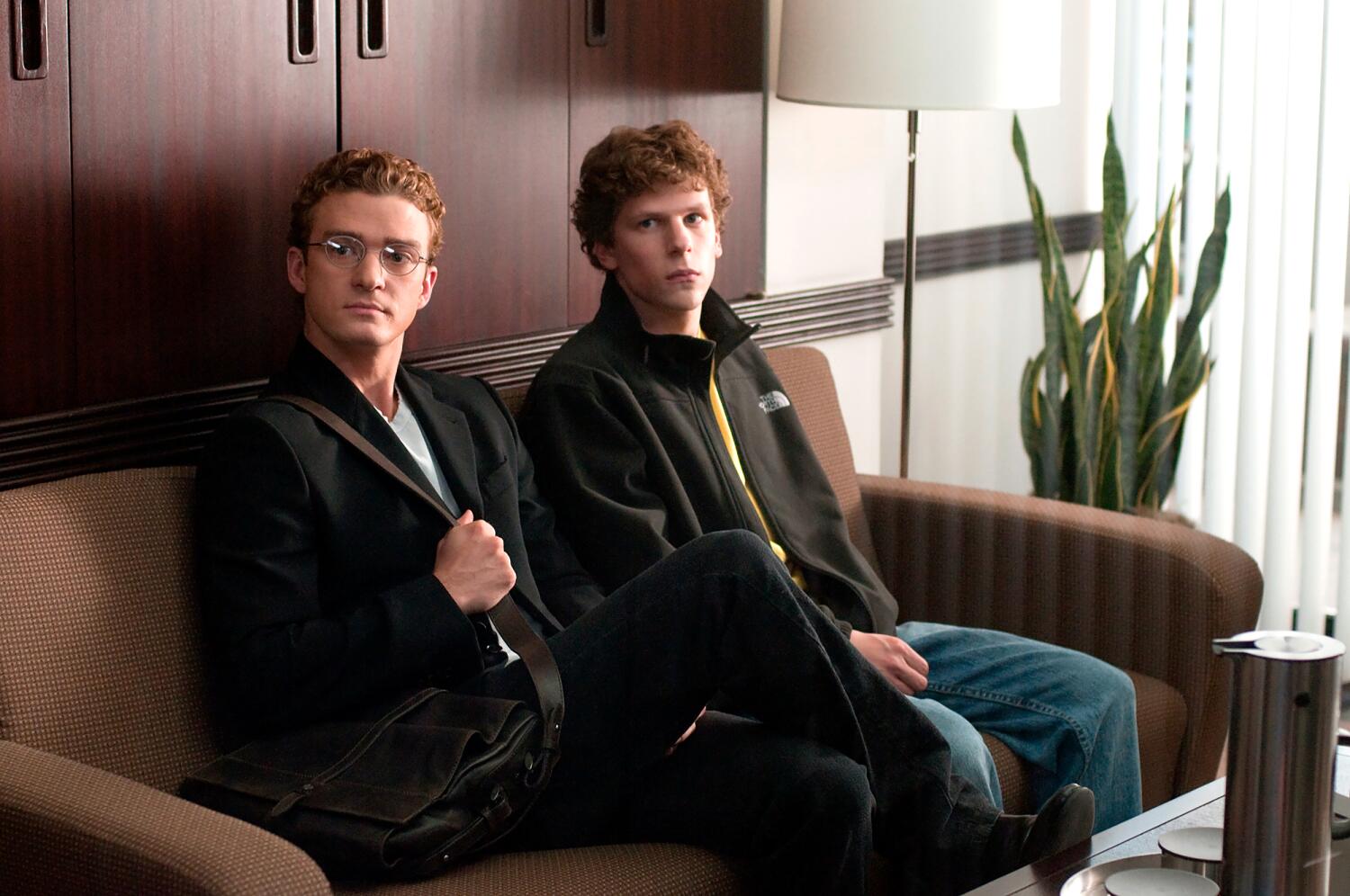
Justin Timberlake, left, and Jesse Eisenberg in the 2010 movie "The Social Network," directed by David Fincher.(Merrick Morton / Columbia TriStar )‘The Social Network’ (2010)
In 2010, Apple introduced the iPad, Instagram launched its app and Silicon Valley still looked to many tech-besotted Americans like a force for progress. At a moment when technology companies were promising to bring people closer together, David Fincher’s acerbic drama about the founding of Facebook had a darker theory about why people wanted to connect in the first place. Aaron Sorkin’s screenplay traces Facebook’s creation back to a very old human desire: getting noticed by the people who matter. Instead of celebrating innovation, the movie unfolds through lawsuits and broken friendships. At Harvard, Jesse Eisenberg’s Mark Zuckerberg fixates on the exclusive final clubs that won’t quite accept him. It’s a surprisingly sour approach for a Facebook origin story. Years before social media became a political battleground, Fincher was focused on something more basic — the fear that everyone else had been invited to a party you couldn’t get into. The movie ends with Zuckerberg alone at a computer, refreshing the Facebook page of the woman who dumped him and waiting for her to accept his friend request. More than 15 years later, it’s still hard to think of a better image for the loneliness and insecurity lurking beneath our connected lives. — Josh Rottenberg
See also: “Her,” “Eighth Grade,” “Ingrid Goes West”
Post-9/11 anxieties

A scene from the 2004 movie "Team America: World Police," directed by Trey Parker.(Melinda Sue Gordon / Paramount Pictures)‘Team America: World Police’ (2004)
To add drama to the ennui over the 2000 U.S. presidential campaign, “South Park” creators Trey Parker and Matt Stone pledged to immediately produce a silly sitcom about the winner. “That’s My Bush!” ran for eight episodes in the spring of 2001, with plans to spin off into a feature called “George W. Bush and the Secret of the Glass Tiger.” But the September 11 attacks changed everything, including the work of satirists. Parker and Stone pivoted to “Team America: World Police,” a bomb-throwing comedy about our country’s napalm-strength combination of naïveté and swagger. To prevent an attack hailed as “9/11 times a thousand,” a squadron of puppet commandos blows up the planet themselves. The dark joke is these marionettes aren’t behaving much differently than the action heroes who have shaped the national id — it’s a through-the-looking-glass lens into our Hollywoodized view of the globe, down to the Parisian streets made of cobblestone croissants. At once straight-faced, sacrilegious and scatological, “Team America” needed nine tries to eke past the MPAA. Yet in divided times, it was a unifier. The political spectrum from Kim Jong Il to Alec Baldwin got equally savaged and the film’s eff-yeah patriotic theme song (“Rock and roll! The Internet! Slavery!”) could even be heard blaring from real-life tanks in Fallujah. — Amy Nicholson
See also: “Eddington,” “Idiocracy,” “Harold & Kumar Escape from Guantanamo Bay”
Sign up for Indie Focus, a weekly newsletter about movies and what’s going on in the wild world of cinema.
This story originally appeared in Los Angeles Times.
Source: “AOL Entertainment”
